Cascara Sagrada: Why The Bark Is Aged, And What A Cascaroside Is
Cascara sagrada is seventh on this panel, and until now no article on this site has looked at its bark on its own. This one goes into the bark: what a cascaroside is, why the name itself means aged bark, why a compound wrapped in sugar has to wait for bacteria in the colon, what has been published about it, and what a seventh-place entry with no amount can and cannot tell a reader.
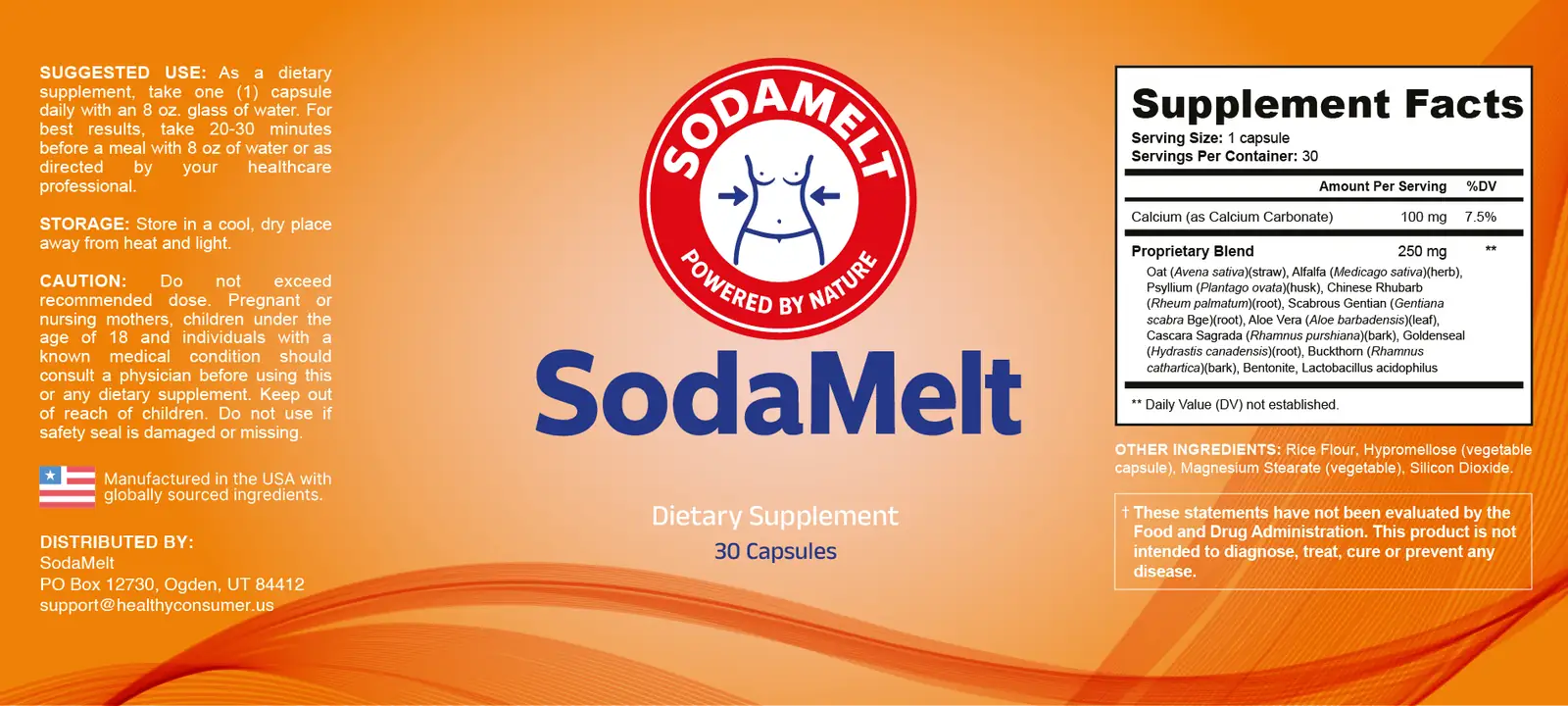
- The panel prints “Cascara Sagrada (Rhamnus purshiana)(bark)” seventh of eleven names in a 250 mg blend, with no amount of its own. Because the names are printed in descending order of weight, the row cannot exceed about 35.7 mg.
- The working chemistry of the bark is a set of sugar-bound anthrone compounds called cascarosides. Human digestive enzymes do not split them. Bacteria in the large intestine do, which is why the effect is delayed.
- Fresh bark is not used. Pharmacopoeial practice calls for aged or dried bark because fresh material contains anthrone forms that the European regulator’s assessment says “cause undesirable emetic effects,” and that oxidise on drying and storage into forms that do not.
- Good analytical methods exist for cascarosides. The clinical literature on cascara bark preparations is thin: the EMA assessment reports no clinical safety studies and no pharmacokinetic data for them, only case reports and analogy to senna and aloe.
- A seventh-place, no-amount entry tells a reader the name and the part. It cannot tell them whether the row is aged bark or an extract, how much of it there is, or how many cascarosides it carries.
Seventh of eleven, and what the order caps
Look at the Supplement Facts panel and the cascara row is easy to miss. It sits in the middle of a single wrapped paragraph inside the Proprietary Blend, between aloe vera and goldenseal: Cascara Sagrada (Rhamnus purshiana)(bark). No milligrams, no percentage, no marker compound. The blend as a whole is 250 mg, shared among eleven names, and that is the only weight the label gives.
There is one thing the label’s own rules let a reader do with it. Under 21 CFR 101.36(c)(2), the dietary ingredients inside a proprietary blend are declared “in descending order of predominance by weight.” Cascara is seventh, so six names before it each weigh at least as much as it does. If all seven weighed exactly the same, each would be 250 divided by seven, about 35.7 mg. Since the first six are at least as heavy as the seventh, and there are four more names after it, the seventh row cannot be more than about 35.7 mg, and in any realistic split it is a good deal less. That is a ceiling, not an estimate. It is the same reading the article on what a proprietary blend hides applies to the whole panel, and this article applies it to one row.
Cascara is one of the four stimulant-laxative botanicals on this panel, and until now the bark had no article of its own on this site. Rhubarb root has its own, the buckthorn Latin name has its own, and the four together are described in the piece on four stimulant laxatives in one blend. This one fills the gap, and it does so by going into the bark itself: what it is, why it is not used fresh, and what has been published about it.
What the name and the Latin binomial cover
The European Medicines Agency’s herbal committee (HMPC) published a full assessment report on this bark in May 2020, and it is the most complete public summary available. It defines the herbal substance as the dried, whole or fragmented bark of Rhamnus purshiana DC., a name that some sources now place in the genus Frangula. It says the trees are native to the Pacific coast of North America from British Columbia to California, and that the bark was introduced into medicine in 1877. The name itself carries a clue that matters for this article. The report notes that “historically the dried, aged bark of Rhamnus purshiana is called ‘cascara sagrada’ (‘sacred bark’ in Spanish).”
So the traditional name already means a processed material, not a bark stripped off a tree last week. The panel prints the Latin name and the part, and that is good practice: it names the species and says bark. It is worth being exact about what those words do not say. They do not say aged, dried, powdered or extracted. They do not say which lot, which supplier or which year. A binomial fixes the species; it does not fix the state of the material.
The same genus turns up two rows later on this panel. Buckthorn (Rhamnus cathartica) is a different species with a much thinner published record, and the buckthorn article covers that separately. What matters here is only that the two barks share a genus and an overall chemistry, and that a metabolomic comparison of commercial raw materials found cascara and frangula bark “clustered closely” while senna looked quite different.
What a cascaroside is
A cascaroside is the name for one member of a family of large molecules found in the bark. The HMPC report gives the structures, and the older chemistry papers are consistent with it. Each cascaroside is a hydroxyanthracene glycoside: an anthrone (a three-ring core carrying hydroxyl groups, with a partly reduced middle ring) that carries sugars. Cascarosides A and B are, in the report’s words, mixed anthrone C- and O-glycosides, the 8-O-β-D-glucosides of the aloe-emodin anthrone compounds known as aloins A and B, which are diastereoisomers of each other. A 1977 mass-spectrometry and NMR study of the pair reached the same structural conclusion, describing them as C-10 isomers of 8-O-(β-D-glucopyranosyl)barbaloin (the 1977 structural study). A 2020 separation paper isolated six of them, cascarosides A through F, from a single bark extract (the 2020 countercurrent chromatography study).
| Cascarosides | Anthrone core | Notes from the sources |
|---|---|---|
| A and B | Aloe-emodin anthrone | A diastereoisomer pair; the same C-10 pair as the 8-O-glucosides of barbaloin |
| C and D | Chrysophanol anthrone | 8-O-glucosides of chrysaloins A and B |
| E and F | Emodin anthrone | 8-O-glucosides of the emodin anthrone compounds |
The pairing is from the EMA/HMPC assessment report on Rhamnus purshiana cortex. A and B, C and D, and E and F are each two forms of one compound differing at a single carbon (C-10).
The European Pharmacopoeia sets a quality floor on the whole bark. According to the HMPC report, which quotes the monograph, cascara must contain not less than 8.0% hydroxyanthracene glycosides, of which not less than 60% are cascarosides, both expressed as cascaroside A. Its description of the dried bark is that the total hydroxyanthracene complex is 60 to 70% cascarosides, 10 to 30% aloins and chrysaloins, and 10 to 20% of a mixture of O-glycosides and their aglycones. This is why the sugar-bound forms are the ones a laboratory measures when it wants to say how strong a lot of bark is.
Why a sugar-bound compound needs the colon
The sugars are not decoration. They keep the active core inert until the compound reaches the place it is meant to act. A review of anthranoid metabolism puts it plainly: in the glycoside form, these compounds are “unique targeting molecules” that are carried unabsorbed to the large intestine, where the active aglycon is released by bacterial hydrolysis of the sugar (de Witte and Lemli on anthranoid laxative metabolism). The same review argues that anthrone C-glycosides, of the kind found in cascara, seem substantially less readily absorbed from the gut than the anthraquinones.
The cascara-specific evidence is older and sparser. The HMPC report summarises a 1988 in-vitro study by Dreessen and Lemli of how gut bacteria treat cascarosides (the 1988 cascaroside metabolism paper; the PubMed record carries no abstract, so the description here comes from the EMA’s summary of it). When cascarosides A and B or C and D were incubated with caecal extract from germ-free rats, they were not metabolised. With extract from animals that had a normal gut flora, they were, and after 48 hours no unchanged cascarosides were recovered; rat extracts went on to produce aloe-emodin anthrone or chrysophanol anthrone. A Streptococcus species only hydrolysed the sugar, giving barbaloin or desoxy-aloin, and did not carry the reduction further. The report also summarises a dog study, in which the extract and aloin, both pro-drugs needing bacterial glycosidases, took longer to induce defaecation than the active metabolites did.
The EU herbal monograph says the same thing in its pharmacokinetic section: the O-linked glycosides are not split by human digestive enzymes, are not absorbed to a large extent in the upper gut, and are converted by bacteria of the large intestine into the active metabolite. Its practical consequence is that defaecation, it says, that defaecation “takes place after a delay of 8 - 12 hours due to the time taken for transport to the colon and metabolisation into the active compound.” That is the reason this row can only ever be a slow one, and the article on when each row on this panel could act lays it against the rest of the capsule.
Why the bark is aged
Now the question the article is named for. Why does the historical name mean “aged” bark, and why do pharmacopoeial texts insist on it?
The HMPC report gives the chemical reason in one paragraph. Fresh bark, it says, contains mono-anthrone O-glycosides, dianthrones, C-glycosides, aloe-emodin O-glycosides and free anthrones. Some 80 to 90% of the free anthrones are bound as C-glycosides and 10 to 20% as O-monoanthrone glycosides. “During the drying procedure the mono-anthrones and their O-glycosides, which cause undesirable emetic effects, are oxidized to dianthrone- and anthraquinone-O-glycosides. These forms are free of these unwanted effects.” The report credits this to a 1976 review of anthraquinone derivatives in vegetable laxatives (van Os, 1976; the PubMed record has no abstract, so the description rests on the EMA’s reading of it). It also cites a 1967 pharmacognosy source for the practical summary: fresh bark has an emetic effect and dried bark a laxative one.
A 2017 mass-spectrometry paper on cascarosides opens with the same point in different words. It notes that some plants of this kind “need to be stored at least one year before they can be used in order to oxidize anthrones into oxanthrones, so to avoid severe diarrhea and dehydration.” Its own work characterised the anthrone compounds, cascarosides A to D, alongside two oxanthrone forms, 10-hydroxycascarosides A and B, and showed how to tell the two classes apart by fragmentation (the 2017 cascaroside fragmentation study).
Notice that the two sources describe the oxidation in slightly different chemical terms. One says dianthrone and anthraquinone O-glycosides; the other says oxanthrones. Both agree on the shape of the story. The reduced anthrone forms are the harsh ones. Time, air and drying convert them into gentler oxidised forms. The end product is still capable of acting once bacteria in the colon have worked on it, because the effect the laxative is used for is the colonic one.
A 1984 paper on tissue cultures shows how delicate the reduced forms are. The authors grew callus from the cambial zone of Rhamnus purshiana and extracted the fresh callus “in such a way that oxidation was prevented” to see the genuine anthranoid forms. In the fresh callus of R. purshiana the glycosides of chrysophanol anthrone and physcion anthrone dominated; in freeze-dried intact bark, the glycosides of emodin, emodin anthrone and aloe-emodin were predominant (the 1984 callus culture study). Callus and bark are different tissues, so this is not a before-and-after measurement of aging. It is enough to show that the anthrones are the parts of the chemistry that oxidation reaches first, and that anyone studying them has to protect them to see them.
What follows for a label reader is modest but useful. The word cascara on a panel points at a material with a processing history. Its main tradition of use is aged or dried bark, and the reason is a documented one. The label does not say which processing this row had, and it does not need to. A reader who wants to know can ask.
What the analytical literature offers
Cascara is well served by analytical chemistry, which is the good news of this article. A validated method for cascaroside A, cascaroside B, emodin and aloe-emodin in extracts of the bark reported recoveries of 94 to 117% and limits of quantification of about 0.03 micrograms per millilitre, and found that a simple ultraviolet method agreed with the chromatography (the 2022 HPLC and UV determination). New cascarosides are still being discovered. And the compounds are available as reference material, because a separation paper describes the isolation of cascarosides in milligram to hundreds-of-milligram amounts as marker compounds for the herb.
The same literature carries a caution. A 2025 study compared a lyophilised and a spray-dried extract of the bark and found that the extraction method directly influenced both the phytochemical composition and the biological effects. Both extracts were rich in anthraquinones expressed as cascaroside A (45.65 to 72.17 micrograms per millilitre), but they behaved differently in the plant-cell assays the authors used, and the authors said the scarcity of studies on cascaroside A raised concerns about continued use in supplements (the 2025 extract study). That is a laboratory finding in lettuce seedlings, not a human one, and should be read that way. What it does show is that “cascara” describes a family of materials, not a single one.
Market data point the same way. An Italian survey of 43 botanical products and supplements found that a third contained detectable hydroxyanthracene derivatives above the limit of quantification, and that the highest concentrations, up to 1,352.9 mg/kg for the sum of aloins A and B, were in solid supplements derived from senna, cascara, rhubarb and frangula (the 2025 Italian market survey). It measured aloins, aloe-emodin, emodin and danthron, not cascarosides, and does not describe any product on this site. But it makes the point that products in this family differ widely in what they contain.
One older study belongs in this section because it is about the quality of the bark rather than its chemistry. A survey of cascara sagrada raw material and tablets in Argentina found that the bark was a good substrate for aflatoxin-producing Aspergillus, that aflatoxin was detected in two of nine raw material samples and in one of ten tablet lots, and that its authors concluded quality control should include an aflatoxin assay (the 1999 mycotoxin survey). It is a 1999 study of one country’s market and is not evidence about any current product, but it shows that “quality” for this bark has more than one axis.
What the clinical literature offers
The clinical side is thinner than most readers assume, and the regulator says so directly. The HMPC assessment states that there are no clinical safety studies on cascara bark preparations, no data on their use in children, no patient-exposure data, and no pharmacokinetic data for cascara preparations. The laxative effect is supported by a dog study of motility and by analogy with senna and aloe, whose constituents are handled in a similar way. The European monograph accepts the use as well-established for short-term relief of occasional constipation, at a dose of herbal preparation equivalent to 10 to 30 mg of hydroxyanthracene derivatives (calculated as cascaroside A), taken once daily at night. That dose is for a standardised medicinal product. It is not a description of this capsule.
What exists in the literature is a handful of case reports. In 2000, a case of cholestatic hepatitis complicated by portal hypertension was reported in a man who had taken cascara sagrada; its authors attributed the injury to either the anthracene glycoside or another constituent (the 2000 case report). The EMA report reviews the same case, notes that the patient took capsules of aged cascara bark of a stated 5% cascaroside potency, three a day for three days, alongside several other medicines and moderate alcohol, and scores the causality as unlikely on the RUCAM scale. A 2015 report describes an acute hepatitis after large quantities of cascara sagrada in a patient in whom a bile-duct cancer was found during the work-up (the 2015 case report). Neither can show how common such events are, and neither shows that a capsule at label doses does this. The drug reference LactMed, for its part, says maternal cascara intake might cause loose stools in some breastfed infants and should be avoided (the LactMed entry on cascara sagrada).
At the regulatory end, the European Food Safety Authority’s 2024 opinion on preparations from the bark of Rhamnus purshiana and other hydroxyanthracene-containing plants found that the genotoxicity studies submitted were negative, but that the preparations tested were not sufficiently characterised, so the safety of such preparations could not be established from the submitted studies (EFSA’s 2024 opinion). The earlier 2018 opinion on the whole class concluded that hydroxyanthracene derivatives should be considered genotoxic and carcinogenic unless there are specific data to the contrary, and that there is a safety concern for extracts containing them, though uncertainty persists (EFSA’s 2018 opinion). The four-herbs article reads both sides of that literature; this article does not repeat it.
What this row can and cannot tell a reader
Put the pieces together and the seventh-place entry looks like this.
| A reader can tell | A reader cannot tell |
|---|---|
| The species: Rhamnus purshiana, the plant behind cascara sagrada. | Whether the material is aged bark, powdered bark or an extract, or how long it was aged. |
| The part: bark, the part with the cascarosides. | How much cascaroside is in a capsule. No marker compound is printed. |
| The rank: seventh of eleven, so at most about 35.7 mg. | Whether the row is nearer 35.7 mg or a tenth of that. The order gives only a ceiling. |
| That cascarosides are the class that acts, and that the action is colonic. | Which supplier, which lot, which specification, or whether any assay was run. |
Every “cannot” in the right-hand column is a fact the label does not print. None is a claim that the maker lacks the information.
A short piece of arithmetic shows why the ceiling matters. Suppose, purely for illustration, the seventh row were bark that just met the European Pharmacopoeia minimum of 8.0% hydroxyanthracene glycosides, and suppose it were at its ceiling of about 35.7 mg. That would be about 2.9 mg of hydroxyanthracene glycosides. If it were instead a dry extract at the top of the pharmacopoeial range, up to 25.0%, the ceiling would be about 8.9 mg. Both figures sit below the 10 mg lower end of the once-daily range the EU monograph gives for a standardised medicinal preparation. The comparison is loose. The label does not say the row is bark or extract, does not say it meets any pharmacopoeial grade, and the other three anthranoid rows on the panel add their own. The point is not that the capsule delivers a particular amount. The point is that the printed order caps one row, that the cap sits below the range a single-herb medicine uses, and that this is as much as a reader can extract from a printed name.
If the row matters to you, the useful next step is a question, not a number. Which form of Rhamnus purshiana is it, aged bark or an extract? How was it aged? Is there a specification for cascarosides, and was the lot tested? Those are all questions a maker can answer, and the article on the origin line and the compliance marks sets out what a plant-identity specification would have to show before the answer could be checked.
What this article is not saying
It is not saying cascara is unsafe at label amounts, or that the capsule contains any particular amount of it. It is not saying aged bark is a lesser ingredient. Aging is the traditional and documented way of making the bark usable, and the regulator describes it as such. It is not offering an opinion about the whole product, and it takes no position on whether anyone should use a stimulant laxative. What it does is separate three things a printed name can blur together: the plant, the material made from it and the amount in the capsule. The name settles the first, the processing history is documented for the second, and the label prints nothing for the third.
References
- European Medicines Agency, Committee on Herbal Medicinal Products (HMPC). Assessment report on Rhamnus purshiana DC., cortex. Final, Revision 1. EMA/HMPC/909434/2019. 6 May 2020. https://www.ema.europa.eu/en/documents/herbal-report/final-assessment-report-rhamnus-purshiana-dc-cortex-revision-1_en.pdf
- European Medicines Agency, Committee on Herbal Medicinal Products (HMPC). European Union herbal monograph on Rhamnus purshiana DC., cortex. Final, Revision 1. EMA/HMPC/726270/2016. 6 May 2020. https://www.ema.europa.eu/en/documents/herbal-monograph/final-european-union-herbal-monograph-rhamnus-purshiana-dc-cortex-revision-1_en.pdf
- Demarque DP, Pinho DR, Callejon DR, de Oliveira GG, Silva DB, Carollo CA, et al. New cascarosides from Rhamnus purshiana and fragmentation studies of the class by ion trap mass spectrometry. Rapid Commun Mass Spectrom. 2017;31(14):1169-1174. PMID 28440576. https://pubmed.ncbi.nlm.nih.gov/28440576/
- Rho T, Kil HW, Seo YJ, Shin KJ, Wang D, Yoon KD. Isolation of six anthraquinone diglucosides from cascara sagrada bark by high-performance countercurrent chromatography. J Sep Sci. 2020;43(21):4036-4046. PMID 32876395. https://pubmed.ncbi.nlm.nih.gov/32876395/
- Fairbairn JW, Evans FJ, Phillipson JD. Cascarosides A and B. J Pharm Sci. 1977;66(9):1300-3. PMID 903869. https://pubmed.ncbi.nlm.nih.gov/903869/
- de Witte P, Lemli L. The metabolism of anthranoid laxatives. Hepatogastroenterology. 1990;37(6):601-5. PMID 2289777. https://pubmed.ncbi.nlm.nih.gov/2289777/
- Dreessen M, Lemli J. Studies in the field of drugs containing anthraquinone derivatives. XXXVI. The metabolism of cascarosides by intestinal bacteria. Pharm Acta Helv. 1988;63(9-10):287-9. PMID 3237734. https://pubmed.ncbi.nlm.nih.gov/3237734/
- van Os FH. Anthraquinone derivatives in vegetable laxatives. Pharmacology. 1976;14 Suppl 1:7-17. PMID 790407. https://pubmed.ncbi.nlm.nih.gov/790407/
- van den Berg AJ, Labadie RP. Anthraquinones, Anthrones and Dianthrones in Callus Cultures of Rhamnus frangula and Rhamnus purshiana. Planta Med. 1984;50(5):449-51. PMID 17340351. https://pubmed.ncbi.nlm.nih.gov/17340351/
- Migues VH, Mauricio J, Gomes AF, David JP. Determination of anthraquinones in Rhamnus purshiana using high-performance liquid chromatography coupled to diode array detector and simple ultraviolet spectroscopic analysis. J Sep Sci. 2022;45(14):2478-2487. PMID 35562848. https://pubmed.ncbi.nlm.nih.gov/35562848/
- Silva Souza K, da Cunha Neto AR, Chagas-Paula DA, Barbosa S, da Silva GA, Calvelli JVB. Phytotoxicity and cytogenotoxic effects of extracts from the medicinal bark of Rhamnus purshiana DC. (Rhamnaceae). J Toxicol Environ Health A. 2025;88(12):505-517. PMID 39964315. https://pubmed.ncbi.nlm.nih.gov/39964315/
- Peloso M, Capriotti A, Accurso D, Butovskaya E, Fedrizzi G, Caprai E. UPLC-MS/MS Analysis of Hydroxyanthracene Derivatives in Botanical Food Products and Supplements: Surveillance of the Italian Market. Foods. 2025;14(7):1229. PMID 40238473. https://pubmed.ncbi.nlm.nih.gov/40238473/
- I R, E V, G V, M H, H F, C C. Mycotoxicological control on raw material and tablets of cascara sagrada (Rhamnus purshiana). Mycotoxin Res. 1999;15(2):91-5. PMID 23605186. https://pubmed.ncbi.nlm.nih.gov/23605186/
- Nadir A, Reddy D, Van Thiel DH. Cascara sagrada-induced intrahepatic cholestasis causing portal hypertension: case report and review of herbal hepatotoxicity. Am J Gastroenterol. 2000;95(12):3634-7. PMID 11151906. https://pubmed.ncbi.nlm.nih.gov/11151906/
- Nakasone ES, Tokeshi J. A Serendipitous Find: A Case of Cholangiocarcinoma Identified Incidentally After Acute Liver Injury Due to Cascara sagrada Ingestion. Hawaii J Med Public Health. 2015;74(6):200-2. PMID 26114074. https://pubmed.ncbi.nlm.nih.gov/26114074/
- Cascara Sagrada. Drugs and Lactation Database (LactMed). Bethesda (MD): National Institute of Child Health and Human Development; 2006-. Updated 17 May 2021. PMID 30000387. https://pubmed.ncbi.nlm.nih.gov/30000387/
- EFSA Panel on Nutrition, Novel Foods and Food Allergens (NDA), Turck D, Bohn T, Castenmiller J, et al. Scientific Opinion on additional scientific data related to the safety of preparations of Rheum palmatum L., Rheum officinale Baill. and their hybrids, Rhamnus purshiana DC., Rhamnus frangula L. and Cassia senna L., submitted pursuant to Article 8(4) of Regulation (EC) No 1925/2006. EFSA J. 2024;22(5):e8766. PMID 38784839. https://pubmed.ncbi.nlm.nih.gov/38784839/
- EFSA Panel on Food Additives and Nutrient Sources added to Food (ANS), Younes M, Aggett P, Aguilar F, et al. Safety of hydroxyanthracene derivatives for use in food. EFSA J. 2018;16(1):e05090. PMID 32625659. https://pubmed.ncbi.nlm.nih.gov/32625659/
- Nezi P, Prete AL, Costanti F, Cicaloni V, Cicogni M, Tinti L, et al. Untargeted Metabolomics for Profiling of Cascara, Senna, Rhubarb, and Frangula Metabolites. Metabolites. 2025;15(12):779. PMID 41441021. https://pubmed.ncbi.nlm.nih.gov/41441021/
- Nutrition labeling of dietary supplements (21 CFR 101.36). 21 CFR 101.36. Electronic Code of Federal Regulations, current as of 24 September 2026, read 27 September 2026. https://www.ecfr.gov/current/title-21/section-101.36