SodaMelt Official Website › Blog › Which Buckthorn Is On This Panel
Which Buckthorn Is On This Panel? Reading A Latin Name
Buckthorn is a common name for several shrubs, and on this panel it comes with a Latin binomial that is easy to skim past. That binomial names one specific buckthorn, and it is not the one named in the most recent European regulatory opinion. This article reads the name closely, sets out what the published record does and does not hold on it, and says why a species name is the most checkable thing on a label.
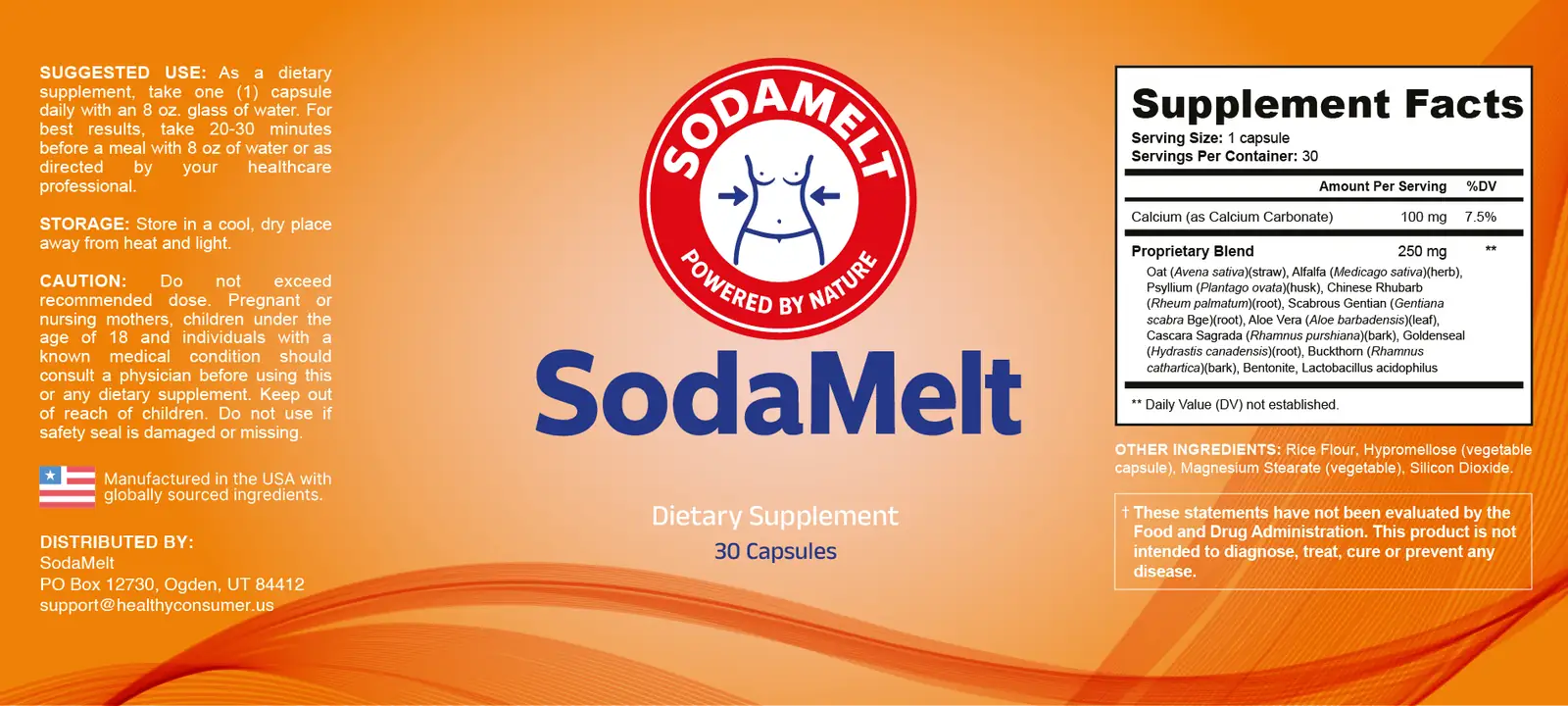
- The panel prints "Buckthorn (Rhamnus cathartica)(bark)", ninth of eleven names in the 250 mg blend, and prints cascara sagrada as a different Rhamnus species two rows above it.
- The drug reference LactMed says the barks, stems and leaves of European, alder and California buckthorn all carry anthraquinones with potent cathartic properties, and says to avoid them while breastfeeding.
- EFSA's 2024 opinion names Rhamnus frangula and Rhamnus purshiana bark. Rhamnus cathartica is not named in its abstract.
- The published record on R. cathartica is thin. The main toxicology item is a 34-day mouse feeding study that found liver changes and called for more work.
- At ninth position the share is likely small. The point of this article is identity, not amount.
A common name is not a species
Buckthorn is a loose label. It has been applied to several unrelated and related shrubs, and one of them, sea buckthorn, has nothing to do with the others. The drug and lactation reference LactMed handles the confusion in a single sentence: the bark, stems and leaves of European buckthorn (Rhamnus catharticus), alder buckthorn (Rhamnus frangula) and California buckthorn (Rhamnus purshiana) contain anthraquinones that have potent cathartic properties, and none of them should be confused with sea buckthorn (Hippophae rhamnoides) (the LactMed entry on buckthorn).
Read that list twice, because it contains something the panel's layout invites you to miss. California buckthorn, Rhamnus purshiana, is the plant known as cascara sagrada. This panel prints both. Cascara Sagrada (Rhamnus purshiana)(bark) is seventh. Buckthorn (Rhamnus cathartica)(bark) is ninth. They are two species of one genus, sitting two rows apart, and each is a stimulant laxative plant in its own right.
| Common name | Latin name as used in the sources below | On this panel? |
|---|---|---|
| European buckthorn | Rhamnus cathartica (LactMed spells it catharticus) | Yes, ninth of eleven |
| Alder buckthorn | Rhamnus frangula, also written Frangula alnus | No |
| California buckthorn, or cascara | Rhamnus purshiana | Yes, as Cascara Sagrada, seventh of eleven |
| Sea buckthorn | Hippophae rhamnoides | No, and unrelated |
Which one a bottle names matters more than the word buckthorn. This panel names the European one.
Some rows on this panel carry an author abbreviation after the species, as the gentian does with Bge. Others do not, as with this one. Neither is an error. What a reader can do with the Latin name is search for it, and that turns out to be revealing.
How the whole panel names its plants
Buckthorn is not the only row worth reading this way. Here is every plant on the panel as printed, with its Latin name and plant part, transcribed from the label artwork.
| Position | Common name | Latin name as printed | Part |
|---|---|---|---|
| 1 | Oat | Avena sativa | Straw |
| 2 | Alfalfa | Medicago sativa | Herb |
| 3 | Psyllium | Plantago ovata | Husk |
| 4 | Chinese rhubarb | Rheum palmatum | Root |
| 5 | Scabrous gentian | Gentiana scabra Bge | Root |
| 6 | Aloe vera | Aloe barbadensis | Leaf |
| 7 | Cascara sagrada | Rhamnus purshiana | Bark |
| 8 | Goldenseal | Hydrastis canadensis | Root |
| 9 | Buckthorn | Rhamnus cathartica | Bark |
Nine botanical names, each with a Latin binomial and a plant part. Bentonite, a clay, and Lactobacillus acidophilus, a bacterium, complete the eleven.
That is a better standard of disclosure than many bottles reach. Every plant has a binomial and every one has a part. What it also shows is that the two barks are both Rhamnus, and that the name a source uses for a plant can differ from the name a label uses. The alder buckthorn is written Rhamnus frangula in the European opinion and the drug reference, and Frangula alnus in a toxicology paper: two names, one plant. A reader comparing a label with the literature has to allow for that, and a certificate of analysis that names the species removes the guesswork.
Which buckthorn the regulators reviewed
The European Food Safety Authority looked at hydroxyanthracene-containing plants in a long-running review that ended, for now, in a 2024 opinion. The opinion's subject was plant preparations from the root or rhizome of Rheum palmatum and Rheum officinale, from the bark of Rhamnus frangula and Rhamnus purshiana, and from the leaf or fruit of Cassia senna. It found that the genotoxicity studies submitted on those preparations were all negative, but that the preparations were not sufficiently characterised, and concluded that the safety of preparations containing these compounds could not be established from the submitted studies (EFSA's 2024 opinion).
Notice which buckthorn is in the list. It is Rhamnus frangula, the alder buckthorn, and Rhamnus purshiana, cascara. The panel's ninth ingredient is neither. Rhamnus cathartica is not named in the opinion's abstract. That is not a criticism of anyone, and it does not mean the species was found safe or unsafe. It means the species was not what the regulator was asked to examine.
The alder buckthorn is the one with the laxative literature behind it. One toxicology group describes the bark of Frangula alnus, the other botanical name for the same plant, as widely used as a laxative (the toxicity study of Frangula alnus bark and emodin). The literature on buckthorn as a laxative is largely a literature on that plant. A panel that prints R. cathartica has chosen the other one.
What has been published on Rhamnus cathartica
A search of PubMed for the Latin name returns about forty records. Most of the first results are not about people at all. They concern an invasive shrub: how it reduces ground-dwelling insect abundance in Iowa forests (the Iowa forest study), how it can be controlled in Saskatchewan (the control-measures study), and how invasive earthworms influence its spread (the earthworm study). In the literature the species appears far more often as a weed than as a drug.
The handful that touch on chemistry and toxicity are worth reading in full.
A phytochemical paper re-investigating the anthraquinones of the genus described a compound, madagascin, isolated from the fruits of R. cathartica and a relative for the first time (the anthraquinone pool of Rhamnus species). It is about the fruit, not the bark, and it shows the chemistry is still being mapped.
The main toxicology paper is a feeding study in mice. The plant had been identified as a possible cause of an unexplained neurological disease in horses, and the researchers fed mice a complete rodent diet with 0, 5 or 25 percent added R. cathartica for 34 days. There were no clinical signs and no gross lesions, and every major tissue was normal on microscopy except the liver. The livers of the treated mice showed marked hepatocellular swelling, which turned out to be deposits of glycogen in the cytoplasm, an uncommon toxic change. The authors said the plant apparently interfered with glycogen metabolism, and called for mechanistic and chronicity studies to determine whether the liver injury progresses (the mouse feeding study of Rhamnus cathartica).
It used a fraction of the diet, not a milligram share of a capsule, and the abstract does not say which plant part was fed. It was in mice, for 34 days. It does not show that a capsule taken by a person harms the liver, and this article does not say so. It does show that, for this species specifically, the toxicology on file is one short rodent study that ended by asking for further work.
There is one more place where the chemistry of this species has been treated as a hazard, and it is environmental. Emodin, the anthraquinone that also turns up in rhubarb, is described as a secondary metabolite that the common buckthorn produces, and it has been reported to cause deformities and death in invertebrates, fish and amphibian larvae. In a controlled experiment, green frog tadpoles exposed for 21 days to high concentrations of emodin developed liver fibrosis, bile duct proliferation and hepatocellular swelling (the study of emodin and buckthorn in green frog tadpoles). A separate study exposed leopard frog tadpoles to leachates from the plant and looked at growth and development at two temperatures (the leachate study in leopard frog tadpoles).
These are amphibian larvae in water, at high concentrations, and they say nothing about a person swallowing a capsule. They are included because they are the rest of what the literature holds on this species, and because they show the same thing the mouse study does: the plant makes compounds with real biological activity, and the toxicology of the species itself has been looked at in animals and in the environment far more than in people.
See exactly what the SodaMelt panel prints
Two rows, eleven botanicals inside one of them, every Latin name and plant part on the label. One capsule a day with a full glass of water.
One bottle $89 · six bottles $294 · 60-day money-back guarantee
Order SodaMelt On The Official WebsiteOne capsule a day · 30 per bottle · lot SOD-26/GO-2953
The closer relative, and what its laboratory data say
For balance, look at what has been measured on the better-studied alder buckthorn, since it is the nearest thing to a reference. In laboratory work on human blood lymphocytes, an extract of Frangula alnus bark at 500 micrograms per millilitre produced cell death and DNA damage, and its component emodin did so at 150 to 200 micrograms per millilitre, with signs of oxidative stress at lower concentrations. The authors concluded that both the bark extract and emodin are cytotoxic and genotoxic to those cells and that emodin-containing preparations should be used with caution (the toxicity study of Frangula alnus bark and emodin).
These are concentrations in a dish, not in a person, and they are on a different species. The right way to hold them is as part of why regulators treat the whole class carefully, and not as a statement about what one capsule does. EFSA's earlier 2018 opinion treated hydroxyanthracene derivatives as a class that should be considered genotoxic and carcinogenic unless specific data show otherwise, and could not provide advice on a safe daily intake (EFSA's 2018 opinion). The four stimulant herbs article sets that alongside the newer, more sceptical reviews, so both sides are on the table.
The nursing line, in one sentence
LactMed's advice on buckthorn is short: maternal intake of the cathartic buckthorn products might cause loose stools in breastfed infants, and their use should be avoided. Its cascara entry says the same, and adds that other cathartics are preferred (the LactMed entry on cascara sagrada). Both sit on this panel. The bottle's own caution asks nursing mothers to consult a physician first, and the caution line, row by row takes each row in turn.
Ninth of eleven, and why the amount is not the issue
Under the federal rule for blends, 21 CFR 101.36, ingredients are listed in descending order of weight. Buckthorn is ninth of eleven. Only bentonite and Lactobacillus acidophilus sit below it. The even split of 250 mg across eleven names is 22.7 mg, and a name ninth in a weight-ordered list is plausibly a good deal under that average.
That has two consequences, and they point in opposite directions. It means this row is probably a small contributor to whatever laxative effect the capsule has, which the panel's other anthranoid rows are better placed to provide. It also means the reason to read this name carefully is not the quantity. It is that the name is the one part of the row that is fully disclosed, and it is the one part a reader can actually check.
Put differently: a supplier can use any species it likes, and the label's job is to say which. This one says. The next step, which only the supplier can take, is to confirm it. The article on what a proprietary blend hides covers the things a blend makes unknowable. The Latin name is on the other side of that line, and it is worth using.
What to ask, and where
- Which species is in the bottle? The panel says R. cathartica. A certificate of analysis for the lot should carry identity testing for the botanical inputs.
- Which part? The panel says bark. The one chemistry paper described above isolated its compound from the fruit, which is a different material.
- How much anthraquinone? The label prints no figure, and a total for all four stimulant plants together is the most a reader could reasonably ask for.
- For how long is it meant to be taken? That is the question the whole family raises, and the bottle does not address it.
The batch verification page explains how to request the certificate for the lot on your bottle. That is the document where a Latin name on a label becomes a test result.
What this article is not saying
It does not say buckthorn is a bad ingredient, and it does not say the panel is wrong to print the species it prints. R. cathartica is an established cathartic plant according to the drug reference cited above, so its presence on a laxative-family panel is coherent. It does not say the capsule is unsafe. Nothing here supports that.
What it says is that two things a reader might assume are not quite true. Buckthorn is not one plant, and the buckthorn on this panel is not the one with the regulatory file. And a thin record is not a clean record: it means there is less to weigh, in either direction. Reading the Latin name closely is how a buyer finds that out, and it takes about two minutes.
References
- Buckthorn. Drugs and Lactation Database (LactMed). Bethesda (MD): National Institute of Child Health and Human Development; 2006-. Read 26 September 2026. PMID 30000918. https://pubmed.ncbi.nlm.nih.gov/30000918/
- EFSA Panel on Nutrition, Novel Foods and Food Allergens (NDA), Turck D, Bohn T, Castenmiller J, De Henauw S, Hirsch-Ernst KI, et al. Scientific Opinion on additional scientific data related to the safety of preparations of Rheum palmatum L., Rheum officinale Baill. and their hybrids, Rhamnus purshiana DC., Rhamnus frangula L. and Cassia senna L., submitted pursuant to Article 8(4) of Regulation (EC) No 1925/2006. EFSA J. 2024;22(5):e8766. PMID 38784839. https://pubmed.ncbi.nlm.nih.gov/38784839/
- Brkanac SR, Gerić M, Gajski G, Vujčić V, Garaj-Vrhovac V, Kremer D, et al. Toxicity and antioxidant capacity of Frangula alnus Mill. bark and its active component emodin. Regul Toxicol Pharmacol. 2015;73(3):923-9. PMID 26399165. https://pubmed.ncbi.nlm.nih.gov/26399165/
- Schuh M, Larsen KJ. Rhamnus cathartica (Rosales: Rhamnaceae) Invasion Reduces Ground-Dwelling Insect Abundance and Diversity in Northeast Iowa Forests. Environ Entomol. 2015;44(3):647-57. PMID 26313971. https://pubmed.ncbi.nlm.nih.gov/26313971/
- Delanoy L, Archibold OW. Efficacy of control measures for European buckthorn (Rhamnus cathartica L.) in Saskatchewan. Environ Manage. 2007;40(4):709-18. PMID 17661129. https://pubmed.ncbi.nlm.nih.gov/17661129/
- Roth AM, Whitfeld TJ, Lodge AG, Eisenhauer N, Frelich LE, Reich PB. Invasive earthworms interact with abiotic conditions to influence the invasion of common buckthorn (Rhamnus cathartica). Oecologia. 2015;178(1):219-30. PMID 25481818. https://pubmed.ncbi.nlm.nih.gov/25481818/
- Epifano F, Genovese S, Kremer D, Randic M, Carlucci G, Locatelli M. Re-investigation of the anthraquinone pool of Rhamnus spp.: madagascin from the fruits of Rhamnus cathartica and R. intermedia. Nat Prod Commun. 2012;7(8):1029-32. PMID 22978222. https://pubmed.ncbi.nlm.nih.gov/22978222/
- Lichtensteiger CA, Johnston NA, Beasley VR. Rhamnus cathartica (buckthorn) hepatocellular toxicity in mice. Toxicol Pathol. 1997;25(5):449-52. PMID 9323832. https://pubmed.ncbi.nlm.nih.gov/9323832/
- Brenes R, Nguyen LMN, Miller DL, Rohde ML. Hepatocellular toxicity of the metabolite emodin produced by the common buckthorn (Rhamnus cathartica) in green frog (Lithobates clamitans) tadpoles. J Wildl Dis. 2022;58(2):341-347. PMID 35255143. https://pubmed.ncbi.nlm.nih.gov/35255143/
- Curtis AN, Bidart MG. Increased Temperature Influenced Growth and Development of Lithobates pipiens Tadpoles Exposed to Leachates of the Invasive Plant European Buckthorn (Rhamnus cathartica) and a Triclopyr Herbicide. Environ Toxicol Chem. 2021;40(9):2547-2558. PMID 34143893. https://pubmed.ncbi.nlm.nih.gov/34143893/
- EFSA Panel on Food Additives and Nutrient Sources added to Food (ANS), Younes M, Aggett P, Aguilar F, Crebelli R, Filipič M, et al. Safety of hydroxyanthracene derivatives for use in food. EFSA J. 2018;16(1):e05090. PMID 32625659. https://pubmed.ncbi.nlm.nih.gov/32625659/
- Cascara Sagrada. Drugs and Lactation Database (LactMed). Bethesda (MD): National Institute of Child Health and Human Development; 2006-. Read 26 September 2026. PMID 30000387. https://pubmed.ncbi.nlm.nih.gov/30000387/