SodaMelt Official Website › Blog › What A Proprietary Blend Hides
What A Proprietary Blend Hides, And What It Cannot
A proprietary blend is one figure standing in for several ingredients. It is legal, it is disclosed, and it is the single most common reason a supplement panel cannot be checked against the research behind it. It also leaves more intact than most readers assume, and the arithmetic is worth learning once.
- A proprietary blend prints one weight for several ingredients and no weight for any of them.
- It is lawful and common. An NIH perspective sets out both why manufacturers use them and what a reader loses.
- The blend total is a real constraint: it is the ceiling for every ingredient inside it.
- Divide the total by the number of names and you have the even split, which is the most generous reasonable reading of any single one.
- What a blend cannot hide is the list of names, the plant parts and the total. Those three are enough to do useful work.
What a proprietary blend is
On a Supplement Facts panel, a proprietary blend is a single line carrying a name, a total weight and a footnote, with the ingredients it contains listed underneath it and no weight against any of them. The names are disclosed. The proportions are not.
That structure is permitted, and it is not a loophole somebody discovered. It exists so a manufacturer can list what is in a formula without publishing the recipe, and the trade-off it creates is exactly the one a careful buyer runs into.
What the footnote is telling you
The footnote beside a blend usually reads that a Daily Value has not been established. That is a statement about the ingredients rather than about the blend: there is no official reference intake for most botanicals, so no percentage can be printed. It is not a warning, and it is not an admission.
Why manufacturers use them
An NIH perspective on the use of proprietary blends in dietary supplements sets out the case from both sides. The arguments for are commercial: a formula is expensive to develop and a published recipe is easy to copy. The arguments against are about the reader, who cannot compare a blend with a trial, with a competing product or with a previous version of the same bottle.
There is also an effect on the literature. The one controlled trial of a cleanse-style blend tested a 1,350 milligram proprietary mixture built on cascara sagrada bark and senna leaf in healthy adult women and found no change in body composition, waist circumference, blood markers or gastrointestinal symptoms. Because it was a blend, the result cannot be attributed to any one of its parts either.
Three consequences a reader can use:
- A blend cannot be compared with a single-ingredient trial, only bounded by one.
- Two products with the same blend name may contain completely different proportions.
- A reformulation inside a blend is invisible from the outside, because the printed total need not change.
What survives the blend, and what does not
This is the part most coverage of proprietary blends gets wrong in one direction or the other. A blend is not a black box, and it is not a disclosure either.
| What you can still say | What you cannot |
|---|---|
| No single ingredient exceeds the blend total, because that is the whole blend. | Where inside that ceiling any one of them actually sits. |
| The blend as a whole can be set against a trial dose and compared. | Whether the ingredient the trial used makes up most of the blend or a trace of it. |
| Every name, binomial and plant part on the list is disclosed and checkable. | How each extract was prepared, which decides whether a trial transfers. |
| The order of the list often reflects descending weight, by convention. | That the convention was followed, because nothing on the label says it was. |
| The number of ingredients sharing the figure, which sets the even split. | That the split is anywhere near even, which it rarely is. |
Five things a blend total still settles, beside the five it does not. A label that named nothing at all could not be held even to the left-hand column.
The left-hand column is the reason a panel is still worth reading closely. Names and plant parts are genuinely useful: they are what let a reader check whether the research a seller gestures at even applies to the material in the capsule.
The arithmetic, worked on this label
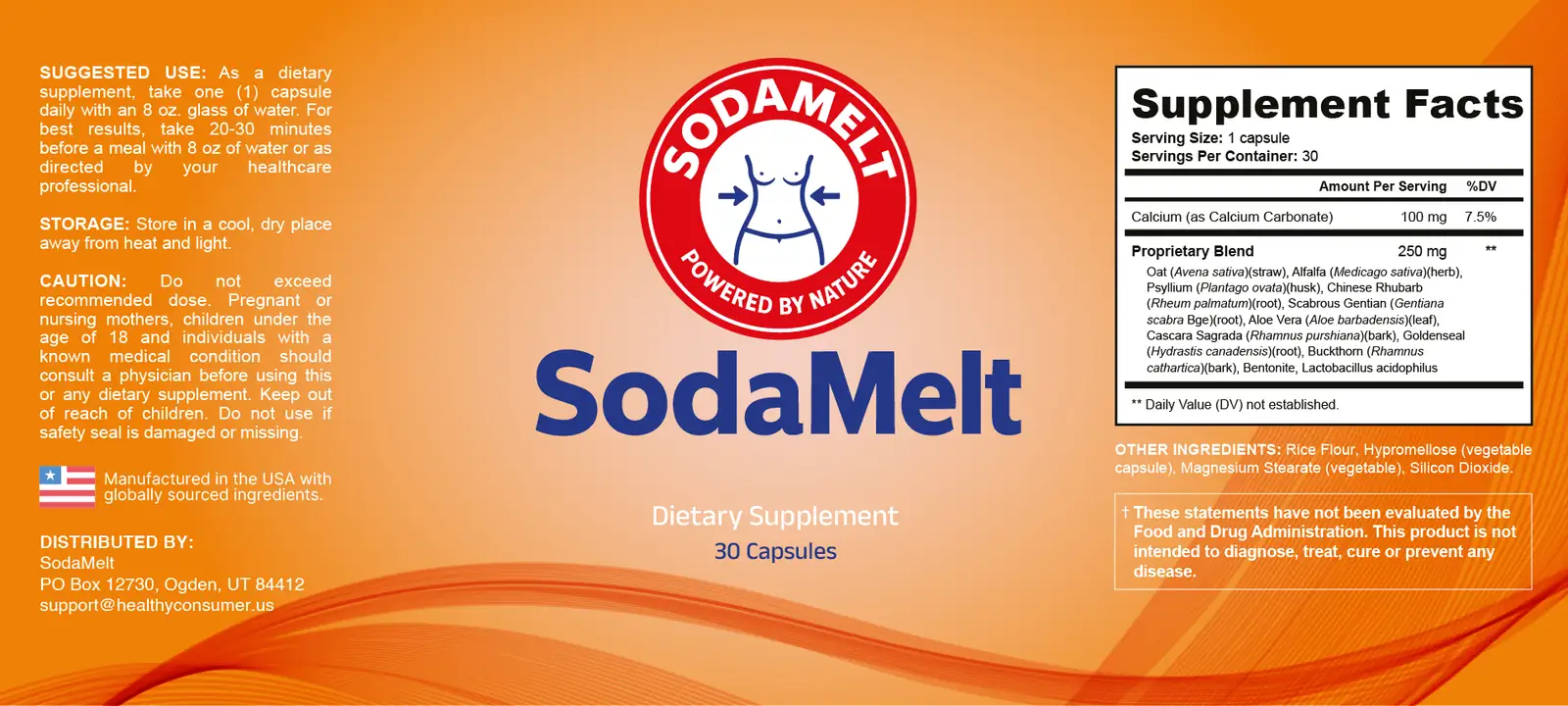
This panel is a clean example because the blend is large in name count and small in weight. 11 botanicals share 250 mg, and calcium sits outside on its own row with a figure of its own.
| Figure | Value on this label | What it is |
|---|---|---|
| Blend total | 250 mg | The ceiling for every botanical inside it, together |
| Names sharing it | 11 | Each one an unknown fraction of the row above |
| Even split | 22.7 mg | What each would be if the blend were divided equally |
| Printed individual amounts | One | Calcium, at 100 mg, which sits outside the blend on its own row |
Four figures, three of them read straight off the panel and one of them arithmetic anybody can repeat.
Two comparisons follow immediately. The psyllium trials ran at ten grams a day, which is forty times the whole blend and about four hundred and forty times an even eleventh of it; the psyllium post works that through. And the Lactobacillus acidophilus trials are dosed in colony forming units, a unit this panel does not use at all, so that comparison cannot be attempted even in principle.
Neither of those is a claim that the formula does nothing. They are statements about what the label permits anybody to conclude, which is a narrower and more defensible thing to say.
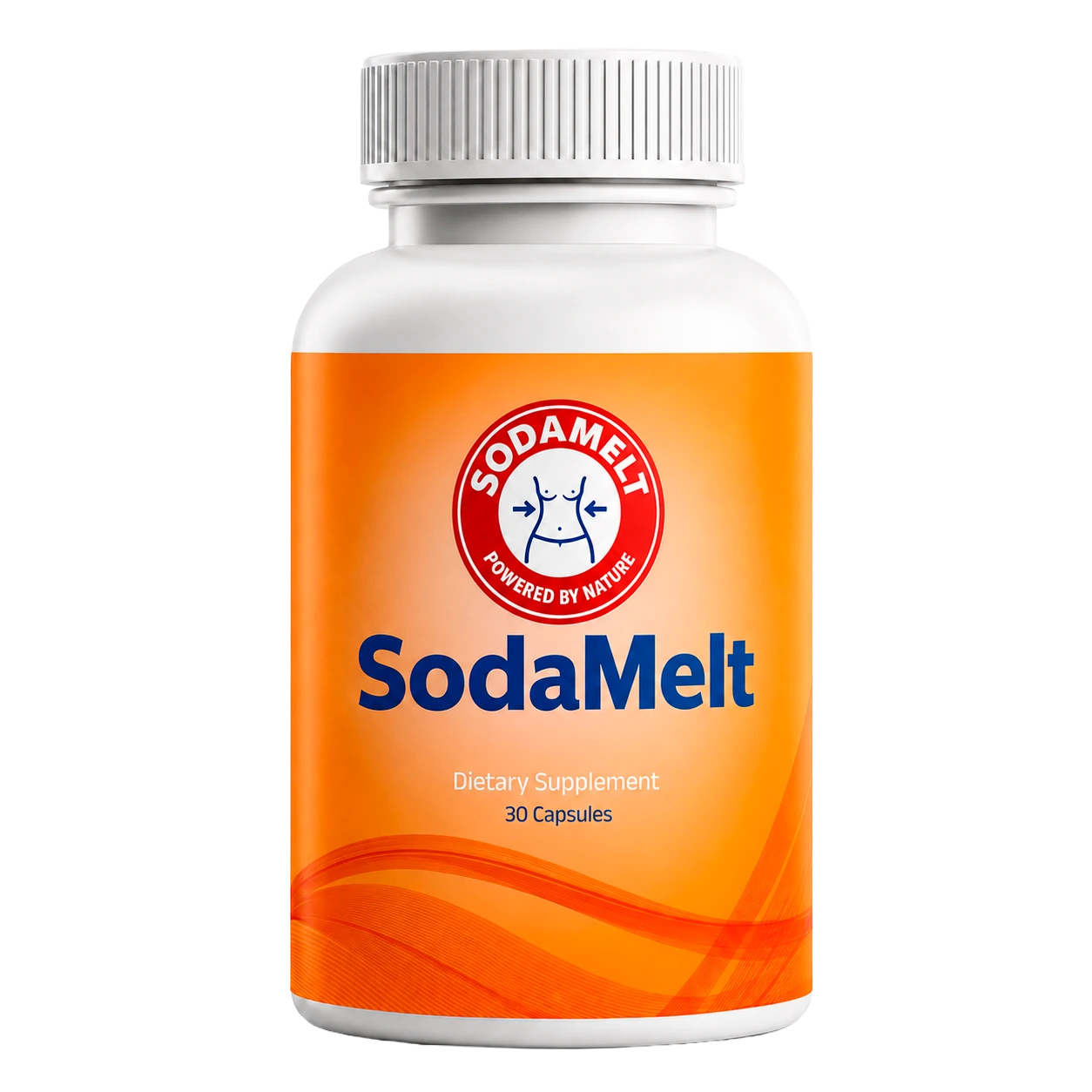
See exactly what the SodaMelt panel prints
Two rows, 11 names inside one of them, every binomial and plant part on the label. One capsule a day, 30 to a bottle, and 60 days from purchase to change your mind.
One bottle $89 · six bottles $294 · 60-day money-back guarantee
Order SodaMelt On The Official WebsiteOne capsule a day · 30 per bottle · lot SOD-26/GO-2953
The ingredient order, and what it is worth
A common piece of shelf advice is that ingredients inside a blend are listed in descending order of weight, so the first names are the largest. It is a reasonable convention and it is frequently followed.
It is not, however, something a label states, and a convention that is not declared cannot be relied on. Treat the order as a weak signal worth noticing and not as a figure. On this panel the first three names are oat straw, alfalfa herb and psyllium husk, which would be a sensible ordering for a fibre-led formula, and that is as far as the observation goes.
Where the same uncertainty shows up elsewhere
Two literatures make the general point concretely. A metagenomic audit of fifty American probiotic products found a third carrying labelling inaccuracies, and a market survey of hydroxyanthracene content in botanical supplements found wide variation between finished products. Both are arguments for wanting a figure on a panel rather than a name.
Where this reasoning stops
A post about what a label conceals can slide into implying that everything is concealed, which is its own kind of dishonesty. Four limits are worth stating.
- A blend is not evidence of a bad product. Plenty of well-made formulas use one.
- A printed figure is a declaration made at manufacture, not a laboratory result. Even a fully itemised panel is a statement of intent.
- The absence of a per-ingredient amount does not mean an ingredient is present in a trace amount. It means nobody outside the manufacturer knows.
- Marketing vocabulary is a separate problem from blend disclosure. The STRIPED label explorer exists because cleanse and detox claims are widespread independently of how the panel is written.
Five questions for any blend row
- What is the blend total, and how many names share it?
- What is the even split, and does the ingredient you care about plausibly sit near it?
- Is the plant part named for every botanical inside the blend?
- Is there any ingredient dosed in units the blend cannot express, such as colony forming units?
- Does any ingredient inside the blend have a mechanism strong enough to matter at a small amount, such as a stimulant laxative?
The last question is the one most worth carrying away, and on this bottle it has an answer: four of the eleven names are anthranoid stimulant laxatives, which is set out in its own post. A blend hides the amount. It does not hide the mechanism, because the mechanism travels with the name.
A dietary supplement for adults of 18 and over, not a medicine and not FDA-approved. Nothing in this post says the formula does not work. It sets out what the printed panel permits a reader to conclude, which is a narrower question and the only one a label can settle. The supplement facts page reproduces the panel exactly as it is printed.
References
- Saldanha LG, Dwyer JT, Hardy CJ, et al. Perspectives on the Use of Proprietary Blends in Dietary Supplements. J Nutr. 2023;153(5):1305-1308. PMID 37004873. https://pubmed.ncbi.nlm.nih.gov/37004873/
- Tinsley G, Urbina S, Santos E, et al. A Purported Detoxification Supplement Does Not Improve Body Composition, Waist Circumference, Blood Markers, or Gastrointestinal Symptoms in Healthy Adult Females. J Diet Suppl. 2019;16(6):649-658. PMID 29958034. https://pubmed.ncbi.nlm.nih.gov/29958034/
- Gundogdu A, Karis G, Killpartrick A, et al. A Shotgun Metagenomics Investigation into Labeling Inaccuracies in Widely Sold Probiotic Supplements in the USA. Mol Nutr Food Res. 2024;68(12):e2300780. PMID 38856022. https://pubmed.ncbi.nlm.nih.gov/38856022/
- Peloso M, Capriotti A, Accurso D, et al. UPLC-MS/MS Analysis of Hydroxyanthracene Derivatives in Botanical Food Products and Supplements: Surveillance of the Italian Market. Foods. 2025;14(7):1229. PMID 40238473. https://pubmed.ncbi.nlm.nih.gov/40238473/
- Vitagliano JA, Kavanaugh JR, Gorges B, et al. The STRIPED Dietary Supplement Label Explorer: A Tool to Identify Supplements Sold with Weight-Loss, Muscle-Building, and Cleanse/Detox Claims. J Nutr. 2025;155(4):1258-1267. PMID 39954739. https://pubmed.ncbi.nlm.nih.gov/39954739/