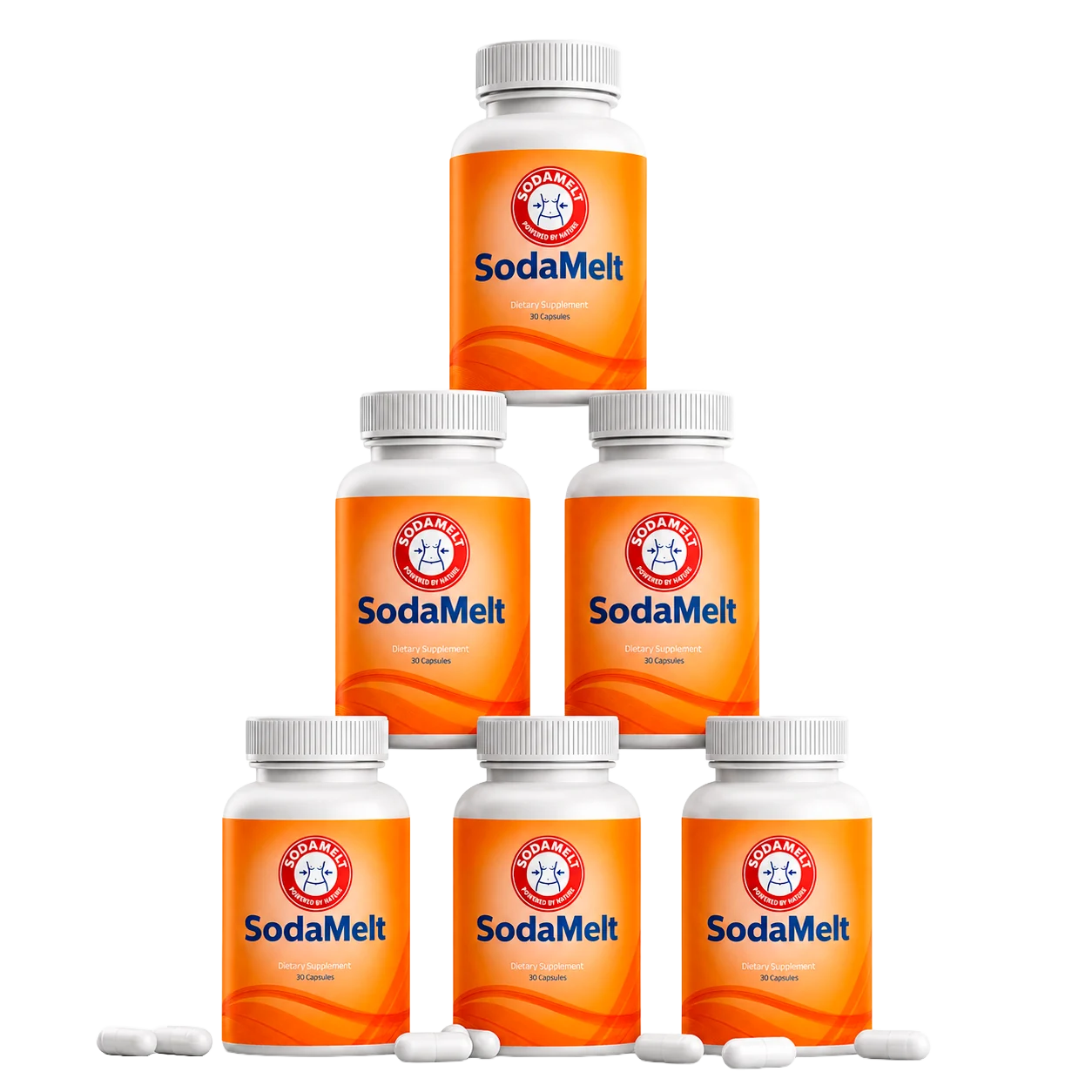
Manufactured In The USA With Globally Sourced Ingredients: What The Origin Line And The Compliance Marks Certify
The label prints one origin sentence, “Manufactured in the USA with globally sourced ingredients,” and the website adds three graphics: a registered-facility roundel, a GMP seal and a foreign-and-domestic-ingredients seal. Each has a precise meaning in federal regulation, and none of them says what a shopper might read into it. This article goes to the regulatory text, one mark at a time, and then asks what a species-identity test would need to show for a botanical row.
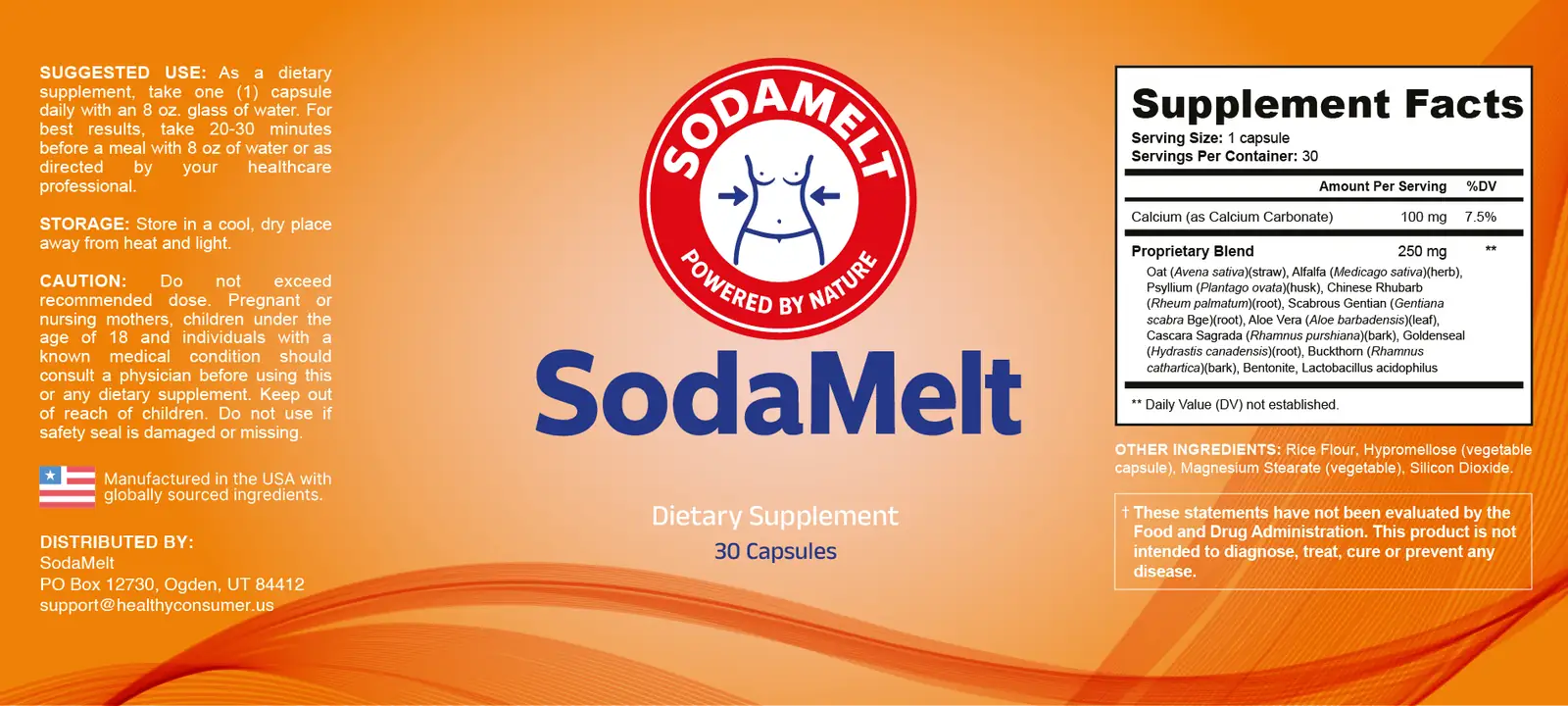
- The printed artwork carries one origin sentence, “Manufactured in the USA with globally sourced ingredients”, and a distributor line. It does not print the words “registered facility” or “GMP”; those two marks appear as separate graphics.
- The origin sentence is a qualified claim. It says a manufacturing step happened in the United States and that not every ingredient did. It does not say which rows came from where.
- Under 21 CFR 1.242, a facility registration number “does not in any way convey FDA’s approval or endorsement of a facility or its products.”
- Good manufacturing practice is a rule in 21 CFR Part 111 that a manufacturer must follow, and the statute treats a supplement made outside it as adulterated. The rule requires specifications, identity testing and batch records. It does not require the label to show any of them.
- None of the three marks names a facility, a registration number, a certifying body, a species test or an amount for any of the eleven names in the blend.
What the label prints, and what it leaves out
Start with the object itself. The label artwork on this site has a small flag icon at the lower left, and beside it one sentence: Manufactured in the USA with globally sourced ingredients. Under that, a line reading “Distributed by” with a company name, a mail address and a support email. That is the whole of the origin information on the printed artwork.
Two things are worth noticing before any law gets involved. First, the sentence says where a step happened (manufacturing) and where the ingredients came from only in the loosest sense (globally). Second, the business line names a distributor, not a factory. Federal food labeling rules explain why that is normal. Title 21 CFR 101.5(a) requires the label of a packaged food to “specify conspicuously the name and place of business of the manufacturer, packer, or distributor.” Where the food is not made by the named company, 101.5(c) asks for a phrase that reveals the connection, and gives “Manufactured for” and “Distributed by” as examples. And 101.5(e) allows a company that makes or packs at a place other than its principal place of business to state the principal place of business instead, unless that would be misleading.
Read together, those three paragraphs mean a compliant label can name a distributor and never say which building the capsules came out of. That is not a loophole so much as the design. It does mean that a shopper holding this bottle cannot tell, from the printed artwork, which facility did the manufacturing, and therefore cannot check anything about it.
Now the two graphics. The site’s asset folder carries a blue roundel reading “Registered Facility” around an FDA-style logo, and a red-and-magenta seal reading “Good Manufacturing Practice” around the letters GMP with a tick. It also carries a third seal, “Foreign and Domestic Ingredients” around the letters USA. None of the three is on the printed panel artwork. They belong to the website. So there are really four separate statements to read: the printed sentence, and three pictures that sit around it. This article takes them in turn, using the regulations that actually govern the words.

Three claims folded into one sentence
“Manufactured in the USA with globally sourced ingredients” can be pulled apart into three claims. One: the manufacturing happened in the United States. Two: the ingredients came from around the world. Three: taken together, this is not an “all-American” product. The third claim is the one that matters most, because it decides which rulebook applies.
The Federal Trade Commission has a rule for the unqualified version. Its definition, at 16 CFR 323.1(a), covers any “unqualified representation, express or implied, that a product … is of U.S. origin,” including that it is “made,” “manufactured,” “built” or “produced” in the United States. The prohibition, at 323.2, says it is an unfair or deceptive practice to label a product Made in the United States unless the final assembly or processing occurs in the United States, all significant processing occurs in the United States, and “all or virtually all ingredients or components of the product are made and sourced in the United States.”
The sentence on this label does not make the unqualified claim, and it cannot: it says outright that the ingredients are globally sourced. That is what the FTC’s own business guidance calls a qualified claim, meaning “a claim with limitations or other explanations” that “indicates that the product isn’t entirely of domestic origin.” The same guidance adds that a qualified claim “like an unqualified claim, must be truthful and substantiated,” and warns that even qualified claims may imply more domestic content than exists, so marketers should “avoid qualified claims unless the product has a significant amount of U.S. content or U.S. processing.” The guidance is staff’s view of the law and says it is not binding on the Commission, so treat it as a description of how the agency reads these claims, not as a statute.
What does that leave the reader with? A statement that some real manufacturing work took place in the United States, offered in the form the FTC describes as acceptable when it is substantiated. It says nothing about where the plants grew.
The customs side is a separate rulebook, and it is worth reading because it explains why the finished label says so little. Under the Tariff Act, as implemented at 19 CFR 134.11, an article of foreign origin imported into the United States must be marked with the English name of its country of origin, so that the ultimate purchaser can see it. But who counts as the ultimate purchaser matters. Under 19 CFR 134.35(a), when an imported article is used in United States manufacture that results in an article with a different name, character or use, the manufacturer “will be considered the ‘ultimate purchaser’ of the imported article,” and the article is excepted from marking, although the outermost containers of the imported articles must still be marked. The FTC page describes the same idea from the other side: when a product incorporates materials or processing from more than one country, Customs and Border Protection looks to the last country in which a substantial transformation took place.
Read together, those texts put the country-of-origin mark on the drum or sack of imported material as it arrives, and let the finished, transformed capsule go without a mark of its own. Part 134 also lists general exceptions, for example for crude substances in 134.32(e), and this article does not try to say which botanical raw material falls under which. The point is narrower. As read here, nothing in these texts asks a finished capsule label to list an origin for each ingredient, so the vagueness of “globally sourced” is not a gap in this label. It is what the rules leave room for.
The practical consequence is small but real. If a reader cares whether the Chinese rhubarb, the scabrous gentian or the cascara sagrada came from a particular country, the label cannot answer, and no regulation retrieved for this article requires it to. The same goes for species, plant part and harvest. Origin, species and quality are three different questions, and the sentence answers only a thin slice of the first.
What “FDA-registered facility” means in the regulation
This is the mark most likely to be over-read, so it is worth going to the text. The registration requirement comes from section 415 of the Federal Food, Drug, and Cosmetic Act, codified at 21 U.S.C. 350d, which directs the Secretary to require by regulation that “any facility engaged in manufacturing, processing, packing, or holding food for consumption in the United States” be registered. Dietary supplements are regulated as a category of food under the Act as amended by the Dietary Supplement Health and Education Act of 1994, which is why they fall inside it (a 2018 review of botanical supplement safety assessment describes that arrangement). The implementing rule is Subpart H of 21 CFR Part 1.
Here is what the rule does, in order.
It says who must register. Section 1.225(a) puts the duty on the owner, operator or agent in charge of a domestic or foreign facility engaged in manufacturing, processing, packing or holding food for consumption in the United States, unless an exemption in 1.226 applies. Exemptions include farms, restaurants and retail food establishments. A domestic facility must register “whether or not the food from the facility enters interstate commerce.”
It says when. Under 1.230, a facility registers before it begins to make, pack or hold food, and renews every other year during a window that runs from October 1 to December 31 of each even-numbered year.
It says what goes into the filing. Section 1.232 lists a facility name and address, phone number, trade names, the owner or agent in charge, the food product categories and the activity types (manufacturer/processor, packer, labeler, warehouse and so on), a certification that the information is true and accurate, and, importantly, “a statement in which the owner, operator, or agent in charge provides an assurance that FDA will be permitted to inspect the facility at the times and in the manner permitted by the Federal Food, Drug, and Cosmetic Act.” A registration is a promise to be inspectable.
It says what happens if a registration lapses. Section 1.241 treats an unrenewed registration as expired and lets FDA cancel a registration for a facility that no longer exists or was never required to register.
It says what a registration number means. This is the sentence to remember. Section 1.242 is titled “What does assignment of a registration number mean?” and reads in full: “Assignment of a registration number to a facility means that the facility is registered with FDA. Assignment of a registration number does not in any way convey FDA’s approval or endorsement of a facility or its products.”
That answers the question the roundel invites. “FDA-registered facility” is true of an enormous number of establishments, from snack-food plants to warehouses. It records that a filing exists. It is not an inspection result, it is not a grade and it is not a statement about any batch. A facility can be registered and be out of compliance with good manufacturing practice, and a facility can be compliant and the product still make a claim nobody has checked.
There is a further wrinkle. Section 1.243(a) says the list of registered facilities and the registration documents are “not subject to disclosure under 5 U.S.C. 552,” the Freedom of Information Act. So a member of the public reading a roundel cannot simply request the list and match the plant to a number under that law. Whether some other route exists is not something the regulation text itself addresses, and this article does not claim to know. What can be said is that the roundel, as printed on the website, gives the reader nothing to look up.
One last point on this mark. The site’s own testing and quality page already says the phrase does not appear on the printed label artwork, and the artwork confirms it. The roundel is a website graphic. If a shopper wants to know whether the label itself vouches for a registered facility, the answer is that the printed artwork makes no such statement.
What the GMP rule actually requires
“GMP” is not a certificate. It is a rule. Section 402(g)(1) of the Act, at 21 U.S.C. 342(g)(1), says a dietary supplement is adulterated “if … it has been prepared, packed, or held under conditions that do not meet current good manufacturing practice regulations.” Paragraph (2) lets the Secretary prescribe those practices by regulation, requires that they be “modeled after current good manufacturing practice regulations for food,” and says they “may not impose standards for which there is no current and generally available analytical methodology.” The regulation is 21 CFR Part 111, published in the Federal Register on June 25, 2007.
Who must follow it? Section 111.1(a) says you are subject to Part 111 “if you manufacture, package, label, or hold a dietary supplement,” including a supplement you make that someone else packages or labels, and a supplement imported or offered for import. Holding at a retail establishment for the sole purpose of direct sale to consumers is carved out in 111.1(b). So the rule reaches the maker, the packager and the labeler, and it reaches imported product too.
What does the rule make a manufacturer do? Here is the part a seal never conveys, because it is a paperwork and testing system.
- Set specifications. Section 111.70(b) says that for each component used, the manufacturer “must establish an identity specification,” along with specifications for purity, strength and composition and limits on contamination. Section 111.70(e) requires product specifications for the finished batch for identity, purity, strength and composition.
- Verify identity before use. Section 111.75(a)(1)(i) says that before using a component, the manufacturer must “conduct at least one appropriate test or examination to verify the identity of any component that is a dietary ingredient,” unless FDA grants a petition for an exemption. For other components, a supplier’s certificate of analysis can be relied on only if the manufacturer first qualifies the supplier by confirming its results, keeps documentation, and periodically re-confirms.
- Check the finished batch. Section 111.75(c) says that for a subset of finished batches selected by a sound statistical sampling plan, or for every batch, the manufacturer must verify that the batch meets product specifications, and section 111.75(d) allows an exemption only where there is no scientifically valid method to test that specification at the finished-batch stage.
- Keep a master manufacturing record. Under 111.210, it must list, among other things, “the identity and weight or measure of each dietary ingredient that will be declared on the Supplement Facts label.”
- Keep a batch record for every batch. Section 111.260 lists the lot number, the equipment, the identity and weight of each component used, the actual yield, and the results of any testing performed during the batch.
- Have quality control personnel. Section 111.105 gives them the power to approve or reject specifications, procedures and deviations.
- Keep the records and let FDA see them. Section 111.605(a) sets retention at one year past the shelf-life date, if one is used, or two years beyond the date of distribution of the last batch associated with the records. Section 111.610 requires the records to be readily available for inspection and copying when FDA asks.
It is a serious rule. A manufacturer that really does all of it has to know what is in each batch, and to know it in writing. The definition of “quality” in 111.3 says the supplement must consistently meet “the established specifications for identity, purity, strength, and composition.” Even the definition of a “product complaint” in 111.3 is telling: it names supplements that are “superpotent, subpotent, or contain the wrong ingredient” as things a complaint system must be able to catch.
Now the limits, because they are as instructive as the requirements. First, everything above is a duty on a manufacturer. The text contains no provision for a seal. It gives FDA a right to inspect and to see records, not a duty to certify. A graphic reading “Good Manufacturing Practice” is therefore a manufacturer’s or seller’s statement that it follows the rule, and by itself it identifies no auditor, no scheme and no certificate number. Second, the specifications are the manufacturer’s own. The rule requires that an identity specification exist and that identity be tested. It does not fix what the specification is, so the strength of the assurance depends entirely on how the manufacturer wrote it and how well the test can tell one thing from another. Third, the rule keeps its evidence in files. A shopper does not see the identity test, the specification, the batch record or the supplier qualification, and nothing on the label points to them.
And fourth, the statute does not turn compliance into approval. Section 402(f) of the Act, on safety adulteration of dietary supplements, says that in a proceeding on an ingredient that renders a supplement adulterated, “the United States shall bear the burden of proof on each element to show that a dietary supplement is adulterated” (21 U.S.C. 342(f)(1)). That is a different arrangement from premarket approval, in which the maker would carry the burden. The structure/function language on the label follows the same design. Under 21 U.S.C. 343(r)(6), such a statement may be made if the manufacturer has substantiation that it is truthful and not misleading, and carries the boldface disclaimer that the statement “has not been evaluated by the Food and Drug Administration.” The panel on this label prints that disclaimer, marked with a dagger. The disclaimer and the roundel sit in the same picture, and they say different things.
Where a proprietary blend fits
The GMP rule requires the manufacturer’s master record to state the identity and weight of each dietary ingredient declared on the Supplement Facts label. The labeling rule decides what the public sees. Under 21 CFR 101.36(c), a proprietary blend is identified by that term, its ingredients are declared “in descending order of predominance by weight,” and the quantity shown is “the total weight of all other dietary ingredients contained in the proprietary blend.”
That is exactly what this panel does. Calcium carbonate is a row of its own, 100 mg. The Proprietary Blend row shows 250 mg for eleven names, in an order that runs from Oat (Avena sativa, straw) first to Lactobacillus acidophilus last, with no per-name amount. The GMP and labeling rules fit together like this: the maker has to know and record each weight, the label is allowed to publish only the total, and the seal, whatever it certifies, certifies nothing that would let a reader recover the split. The article on what a proprietary blend hides works through the arithmetic. What matters here is the connection to the marks. A GMP seal cannot be evidence that the rhubarb is present in any given amount, because the amount is not a public number.
The same reasoning applies to the live culture in the last position. Good manufacturing practice includes microbiological limits and identity checks, but nothing in the rule fixes a colony count for a probiotic row, and the label prints none. That is a labeling gap the panel shares with many blends, and it is discussed in the article on the unenclosed Lactobacillus acidophilus row.
The gap: a species is not a seal
Here is the sharpest way to put the difference. The GMP rule requires an identity test for each dietary ingredient. But identity, in a botanical context, has layers. There is the plant part (root versus leaf). There is the species (Rhamnus purshiana versus Rhamnus cathartica). There is the chemistry within a species (how much of a given compound the sample carries). And there is the question of whether the powder in the drum is the plant it was sold as, or something cheaper that resembles it. A test can be appropriate for one layer and blind to another.
This panel is a useful case because it names species carefully. Two of its plants belong to the same genus. The article on the buckthorn Latin name shows how different the literature is for Rhamnus cathartica and for the cascara species two rows above it. A manufacturer’s identity specification for a bark powder could be as loose as a visual and organoleptic examination, or as tight as a marker-compound profile or a DNA test. The rule allows “at least one appropriate test or examination.” It does not say which. So a label can honestly say the facility follows GMP and still leave open whether its identity test could tell two buckthorns apart.
What a species-identity test would need to show
If a mark cannot say whether the Rhamnus in the capsule is the Rhamnus on the label, what could? The published work on botanical authentication is fairly consistent about what a good answer looks like, and it is a useful checklist for reading any botanical row.
The US Pharmacopeial Convention’s botanical experts wrote in 2026 that quality systems, good manufacturing practice among them, “emphasize the importance of botanical identity verification,” and that compendial identity testing comprises orthogonal procedures for morphological and chemical characterisation, specifications and acceptance criteria set against reference standards, consistent nomenclature and labeling (the 2026 compendial perspective on botanical identity testing). A 2025 review reached a compatible conclusion from the DNA side: morphological, organoleptic and chemical methods on their own may not adequately ensure accurate species identification, and DNA barcoding works best inside an orthogonal approach that confirms a result with a second, independent method (the 2025 narrative review of DNA barcoding and herbal authentication).
Two studies show why this is not a formality. A 2024 barcoding survey of 54 Ayurvedic-herb supplements on the US market recovered at least one species from 64.8% of products and the expected species from 38.9%; undeclared plant species turned up in 19 products, and its authors concluded that a combination of genetic loci should be used and that future work should add chemical characterisation, because barcoding alone had limits in these processed products (the 2024 barcoding survey of herbal supplements). Those were not the herbs on this panel, and the study does not say what happened to any product here. It shows that a plain finding of “the label says X” and “the test found X” is not automatic, even for well-known plants.
A second lesson is about chemistry. A 2025 untargeted metabolomics comparison of commercial raw materials found cascara, frangula, rhubarb and senna each with dozens of annotated metabolites, with senna the most distinct and cascara and frangula clustering closely (the 2025 metabolomic profiling of four laxative herbs). Two sister Rhamnus barks with overlapping chemistry are exactly the case where a test that looks only at the main anthranoid markers might not tell them apart, and where a species-specific test earns its keep. And on the rhubarb row, a 2023 chloroplast-genome study noted that few studies had addressed authentication of germplasm within the Rheum palmatum complex, and reported eight InDel and sixty-one SNP loci that could distinguish rhubarb germplasms in specific areas (the 2023 Rheum palmatum complex study). Tools exist, and identity within a species complex is still a research topic.
Before going on, a note on what this article leaves out on purpose. A 2013 survey of North American herbal products that used DNA barcoding was, for years, widely cited. Its journal retracted it in July 2024 (the retraction note). Nothing here relies on its figures, and it is a fair reminder to check whether a headline statistic still stands.
Putting those sources with the regulation, a species-identity test for a botanical row would need to show at least the following.
| What the test needs | Why, in the sources | Applied to this panel |
|---|---|---|
| A named layer of identity: part, species, or chemistry | Identity has layers, and a test can be sound at one and blind at another | The panel names species and part, so the test should too, for each of nine plants |
| Proof it separates the label’s species from look-alikes | Close relatives can share chemistry, and cascara and frangula clustered closely in one comparison | Rhamnus purshiana against R. cathartica and R. frangula; Rheum palmatum against other Rheum |
| A second, independent method | Compendial and DNA reviews both call for orthogonal testing | For example, a chemical profile and a DNA test on the same lot |
| A reference standard and acceptance criteria | Compendial identity testing compares against reference standards with stated limits | What the lot was compared with, and what counted as a pass |
| The right stage of testing | Part 111 requires component identity testing before use; barcoding had limits in processed products in the 2024 survey | Identity is checked on the raw material, before eleven names are blended together |
| A reported result | Part 111 lets a supplier’s certificate of analysis be relied on only if it names the method, the limits and actual results | A result a reader could see, not a seal that says one exists |
The last two rows connect the literature to the rule. Part 111 requires the testing and the records; it does not require the manufacturer to publish them.
That last column is a reading guide, not a finding. This article has not seen, and makes no statement about, any test, certificate or specification for this product. A shopper who wants to know whether the panel’s Latin names are checked has to ask the maker, in the terms in the table.
The same literature offers a practical way to think about the marks. A 2025 review of laboratory approaches lists what mitigates adulteration risk in supplements: quality control testing to specifications for identity, purity, strength and composition as required by GMP, plus certification or verification programmes, quality agreements with suppliers and third-party testing (Ma and colleagues, 2025). Notice that only the first item on that list is what the GMP mark stands for. The other three are things a seller can add and can name. And for a class of product with variable composition, a 2025 Italian survey of 43 botanical products and supplements found hydroxyanthracene derivatives above the limit of quantification in a third of them, with the highest levels in solid supplements derived from senna, cascara, rhubarb and frangula (the 2025 market survey). That is a reason to prefer a named test to a general assurance, in either direction.
The three graphics, read one at a time
With the regulations in hand, each of the three website graphics can be read for what it does and does not establish. This is a reading of the words on the graphics, not of any particular facility or certificate, which nothing on the website names.
| Graphic | What the words match in the regulation | What the graphic itself does not say |
|---|---|---|
| Registered Facility (FDA-style roundel) | Facility registration under 21 U.S.C. 350d and 21 CFR 1.225 to 1.235. A filing that lets the agency know a facility exists and promises inspection access. | Which facility, which registration number, or that anything was inspected. Under 1.242 the number conveys no approval or endorsement of the facility or its products. |
| Good Manufacturing Practice (GMP) | The requirement in 21 CFR Part 111, enforced through 21 U.S.C. 342(g), that a supplement be made under a documented quality system. | Which scheme, which auditor, which date, or that a third party ever checked. Part 111 gives FDA inspection rights and requires records; it has no provision for a seal. |
| Foreign and Domestic Ingredients (USA lettering) | The printed origin sentence, a qualified claim of the kind the FTC’s guidance describes, and not the unqualified “Made in USA” claim that 16 CFR 323.2 restricts. | Which ingredients are foreign, which are domestic, and which country any of them came from. None of the regulatory text read for this article defines a seal of this name. |
The three graphics are illustrations of statements. Two of them describe legal obligations that apply to nearly every supplement maker, and the third repeats a sentence that also appears in words on the artwork.
Read that way, the marks are not misleading, and they are not verification either. A roundel that says “Registered Facility” is telling the truth if the facility is registered. A seal that says GMP is telling the truth if the maker follows Part 111. Neither statement can be checked from a website graphic, and neither says anything the law does not already require of a supplement maker selling in the United States. That is the useful way to hold them: as statements of ordinary legal baseline, not as marks of distinction.
The third graphic deserves one more sentence, because its lettering is the most emphatic. A large “USA” in red, white and blue around the words “foreign and domestic ingredients” is a picture of a mixed claim. If the eye lands on the three letters and skips the words around them, the seal reads as the unqualified claim. The words are the claim. The website’s testing page says the sourcing seal repeats the line on the bottle, and that is what it does.

Questions worth putting to any seller
None of this means the manufacturer is doing anything wrong. It means the marks leave four things unanswered that a curious reader can reasonably ask. These are questions to put to a seller, in any category, not accusations about this one.
- Which facility, and what is its registration status? The regulation lets a company name its principal place of business instead of the plant, so the label may never say. A seller who wants to be checked can name the facility.
- Is the GMP claim a self-statement or a third-party audit? If audited, by whom, against what standard, and when? A seal with no scheme attached is a self-statement.
- What is the identity specification for the botanical rows, and what test enforces it? Part 111 requires one. For a two-buckthorn panel, it matters whether the test could tell the species apart.
- Where do the higher-risk rows come from? If a particular country matters to you, the sentence cannot say. Only the seller can.
Notice what is not on that list: a request to see a lot number or a certificate of analysis for this bottle. This article makes no claim about any certificate or batch for this product, because nothing here has examined one. The four questions are about what a mark would have to name before it could be checked.
What this article is not saying
It is not saying the product is made in a bad facility, that the facility is unregistered, or that the maker ignores Part 111. It has no way to know any of that, and nothing in the article depends on it. It is not calling the origin sentence deceptive: the sentence is qualified in exactly the way the FTC guidance describes, and the label is specific about not claiming an all-domestic product. And it is not treating the marks as worthless. A registered facility is registered. A GMP mark that is true means a written quality system exists.
What it says is narrower. The origin line, the roundel and the seal are statements about a country, a filing and a rule. They are not statements about approval, potency, plant species or this bottle’s contents. Every one of those is a separate question, and on a proprietary-blend panel with one shared weight for eleven names, most of them can only be answered by the maker.
References
- Registration of food facilities (21 CFR Part 1, Subpart H, sections 1.225 to 1.243). Electronic Code of Federal Regulations, current as of 24 September 2026, read 27 September 2026. https://www.ecfr.gov/current/title-21/chapter-I/subchapter-A/part-1/subpart-H
- Registration of food facilities, 21 U.S.C. 350d (section 415 of the Federal Food, Drug, and Cosmetic Act). Legal Information Institute, read 27 September 2026. https://www.law.cornell.edu/uscode/text/21/350d
- Current good manufacturing practice in manufacturing, packaging, labeling, or holding operations for dietary supplements (21 CFR Part 111, sections 111.1, 111.3, 111.70, 111.75, 111.105, 111.210, 111.260, 111.605 and 111.610). Electronic Code of Federal Regulations, current as of 24 September 2026, read 27 September 2026. https://www.ecfr.gov/current/title-21/part-111
- Adulterated food, 21 U.S.C. 342(f) and (g) (section 402 of the Federal Food, Drug, and Cosmetic Act). Legal Information Institute, read 27 September 2026. https://www.law.cornell.edu/uscode/text/21/342
- Misbranded food, 21 U.S.C. 343(r)(6) (statements for dietary supplements). Legal Information Institute, read 27 September 2026. https://www.law.cornell.edu/uscode/text/21/343
- Nutrition labeling of dietary supplements (21 CFR 101.36). 21 CFR 101.36. Electronic Code of Federal Regulations, current as of 24 September 2026, read 27 September 2026. https://www.ecfr.gov/current/title-21/section-101.36
- Food; name and place of business of manufacturer, packer, or distributor (21 CFR 101.5). 21 CFR 101.5. Electronic Code of Federal Regulations, current as of 24 September 2026, read 27 September 2026. https://www.ecfr.gov/current/title-21/section-101.5
- Rule concerning the labeling of U.S. origin claims (16 CFR Part 323, sections 323.1 and 323.2). Electronic Code of Federal Regulations, current as of 24 September 2026, read 27 September 2026. https://www.ecfr.gov/current/title-16/part-323
- Federal Trade Commission. Complying with the Made in USA Standard. FTC business guidance, read 27 September 2026. https://www.ftc.gov/business-guidance/resources/complying-made-usa-standard
- Country of origin marking (19 CFR Part 134, sections 134.1, 134.11, 134.32 and 134.35). Electronic Code of Federal Regulations, current as of 24 September 2026, read 27 September 2026. https://www.ecfr.gov/current/title-19/part-134
- Food and Drug Administration, HHS. Current good manufacturing practice in manufacturing, packaging, labeling, or holding operations for dietary supplements. Final rule. Fed Regist. 2007;72(121):34751-958. PMID 17674484. https://pubmed.ncbi.nlm.nih.gov/17674484/
- Food and Drug Administration, HHS. Petition to request an exemption from 100 percent identity testing of dietary ingredients: Current Good Manufacturing Practice in Manufacturing, Packaging, Labeling, or Holding Operations for Dietary Supplements. Interim final rule. Fed Regist. 2007;72(121):34959-69. PMID 17674485. https://pubmed.ncbi.nlm.nih.gov/17674485/
- Shipkowski KA, Betz JM, Birnbaum LS, Bucher JR, Coates PM, Hopp DC, et al. Naturally complex: Perspectives and challenges associated with Botanical Dietary Supplement Safety assessment. Food Chem Toxicol. 2018;118:963-971. PMID 29626579. https://pubmed.ncbi.nlm.nih.gov/29626579/
- Sarma ND, Monagas M, Giancaspro G, Brinckmann JA, Harnly J, Kababick J, et al. Compendial Perspectives on Botanical Identity Testing. J Nat Prod. 2026;89(2):339-351. PMID 41557965. https://pubmed.ncbi.nlm.nih.gov/41557965/
- Nazar N, Saxena A, Sebastian A, Slater A, Sundaresan V, Sgamma T. Integrating DNA Barcoding Within an Orthogonal Approach for Herbal Product Authentication: A Narrative Review. Phytochem Anal. 2025;36(1):7-29. PMID 39532481. https://pubmed.ncbi.nlm.nih.gov/39532481/
- Harris CM, Kim DY, Jordan CR, Miranda MI, Hellberg RS. DNA barcoding of herbal supplements on the US commercial market associated with the purported treatment of COVID-19. Phytochem Anal. 2024;35(4):664-677. PMID 38225696. https://pubmed.ncbi.nlm.nih.gov/38225696/
- Nezi P, Prete AL, Costanti F, Cicaloni V, Cicogni M, Tinti L, et al. Untargeted Metabolomics for Profiling of Cascara, Senna, Rhubarb, and Frangula Metabolites. Metabolites. 2025;15(12):779. PMID 41441021. https://pubmed.ncbi.nlm.nih.gov/41441021/
- Zhai Y, Zhang T, Guo Y, Gao C, Zhou L, Feng L, et al. Phylogenomics, phylogeography and germplasms authentication of the Rheum palmatum complex based on complete chloroplast genomes. J Plant Res. 2023;136(3):291-304. PMID 36808315. https://pubmed.ncbi.nlm.nih.gov/36808315/
- BMC Medicine Editorial Office. Retraction Note: DNA barcoding detects contamination and substitution in North American herbal products. BMC Med. 2024;22(1):279. PMID 38965520. https://pubmed.ncbi.nlm.nih.gov/38965520/
- Ma C, Monagas M, Bronstein L, Cadwallader A, Goldman V. Dietary Supplement Adulteration: Laboratory Approaches to Risk Mitigation. J Nat Prod. 2025;88(8):2029-2040. PMID 40700739. https://pubmed.ncbi.nlm.nih.gov/40700739/
- Peloso M, Capriotti A, Accurso D, Butovskaya E, Fedrizzi G, Caprai E. UPLC-MS/MS Analysis of Hydroxyanthracene Derivatives in Botanical Food Products and Supplements: Surveillance of the Italian Market. Foods. 2025;14(7):1229. PMID 40238473. https://pubmed.ncbi.nlm.nih.gov/40238473/