SodaMelt Official Website › Blog › Why A Clay Sits Inside This Blend
Why A Clay Sits Inside A Laxative Blend
Ten of the eleven names inside this blend are plants. The tenth by weight is not: Bentonite is a mined clay, and clay has its own long, separate tradition as a folk remedy for digestive complaints, sold on a binding claim that has nothing to do with the anthranoid chemistry doing the documented work elsewhere on this panel. Here is what that binding claim rests on, and what a clay ingredient brings that the botanicals around it cannot.
- Bentonite is a montmorillonite clay, not a botanical. Its presence here is a formulation choice separate from the anthranoid mechanism covered in this site’s post on the blend’s four stimulant herbs.
- Clay’s traditional use in digestive remedies rests on a genuine physical property: its charged mineral surface binds other molecules in water. That is a description of chemistry, not a demonstrated clinical effect for this product.
- The same binding property that makes clay marketable as a “detox” ingredient is also the property that makes ingested clay carry a well-documented contamination risk, because the clay binds whatever was already in the ground it came from.
- At position ten of eleven in a 250 mg blend, the amount of clay in one capsule is necessarily small, which limits both the claimed benefit and the realistic exposure.
- One controlled trial of a different cleanse-style proprietary blend, built on the same anthranoid family this bottle uses, found no measurable effect on body composition or blood markers — a useful caution against assuming any ingredient in a blend like this one is doing quiet, unmeasured work.
What bentonite is, and why it is not one of the plants
Everything else inside this Proprietary Blend is a plant part: straw, herb, husk, root, leaf or bark. Bentonite is a clay, formed from weathered volcanic ash and made up mostly of the mineral montmorillonite. It has no botanical name because it is not a botanical, and it has no anthranoid, beta-glucan or alkaloid content because it is not organic material at all.
Its inclusion in a digestive blend comes from a completely separate tradition than the botanicals around it. Clay-eating and clay remedies appear across many traditional medicine systems worldwide, independent of and generally older than the use of stimulant laxative herbs. Putting the two traditions in one capsule does not merge their evidence; it just means the panel is drawing on two different rationales at once.
The binding claim, and what it is actually a description of
Clay is marketed for digestive use on the idea that it “binds” or “draws out” substances in the gut. That claim has real chemistry behind it: montmorillonite clay particles carry a negative surface charge and a large surface area relative to their size, so they can adsorb positively charged ions and some organic molecules when suspended in water. This is genuine, measurable physical chemistry.
What it is not is a clinical outcome. A description of what a material does in a beaker is not the same claim as a description of what it does inside a person who swallows a capsule containing a few milligrams of it once a day, and the label does not bridge that gap with a trial, a binding-capacity figure or a dose-response curve. This website cannot verify the claim from the panel, because the panel does not attempt to.
The same property, both ways
The property that makes clay marketable also makes it a documented, geology-driven contamination risk, and the mechanism is the same charge-and-surface-area chemistry described above. A clay does not selectively bind only unwanted substances; it binds whatever positively charged material was already present when it formed, which for a mined clay can include lead and cadmium from the deposit itself.
A 2020 analysis of geophagic clays sold in open markets in southern Nigeria for both local consumption and regional distribution measured lead in excess of the WHO/FAO maximum permissible limit in all twenty samples tested, with sixteen percent also over the cadmium limit (Orisakwe et al., 2020). A clinical review of severe gestational lead poisoning found that of fifteen women identified with dangerously high blood lead, most had developed it from eating soil, clay or pottery (Shannon, 2003). Neither study tested a processed, encapsulated bentonite ingredient of the kind sold to US supplement manufacturers, and contamination in both papers tracks the specific deposit rather than the word “bentonite” itself — but the underlying chemistry, a mineral binding whatever was in its source ground, is exactly the property being marketed as a benefit on the other side of the same coin.
This is not a claim that this bottle’s bentonite is contaminated. It is a claim that “binds things” is not a claim you can accept only the flattering half of. No lead, cadmium, arsenic or mercury result is printed on this label for any ingredient, clay or otherwise.
See exactly what the SodaMelt panel prints
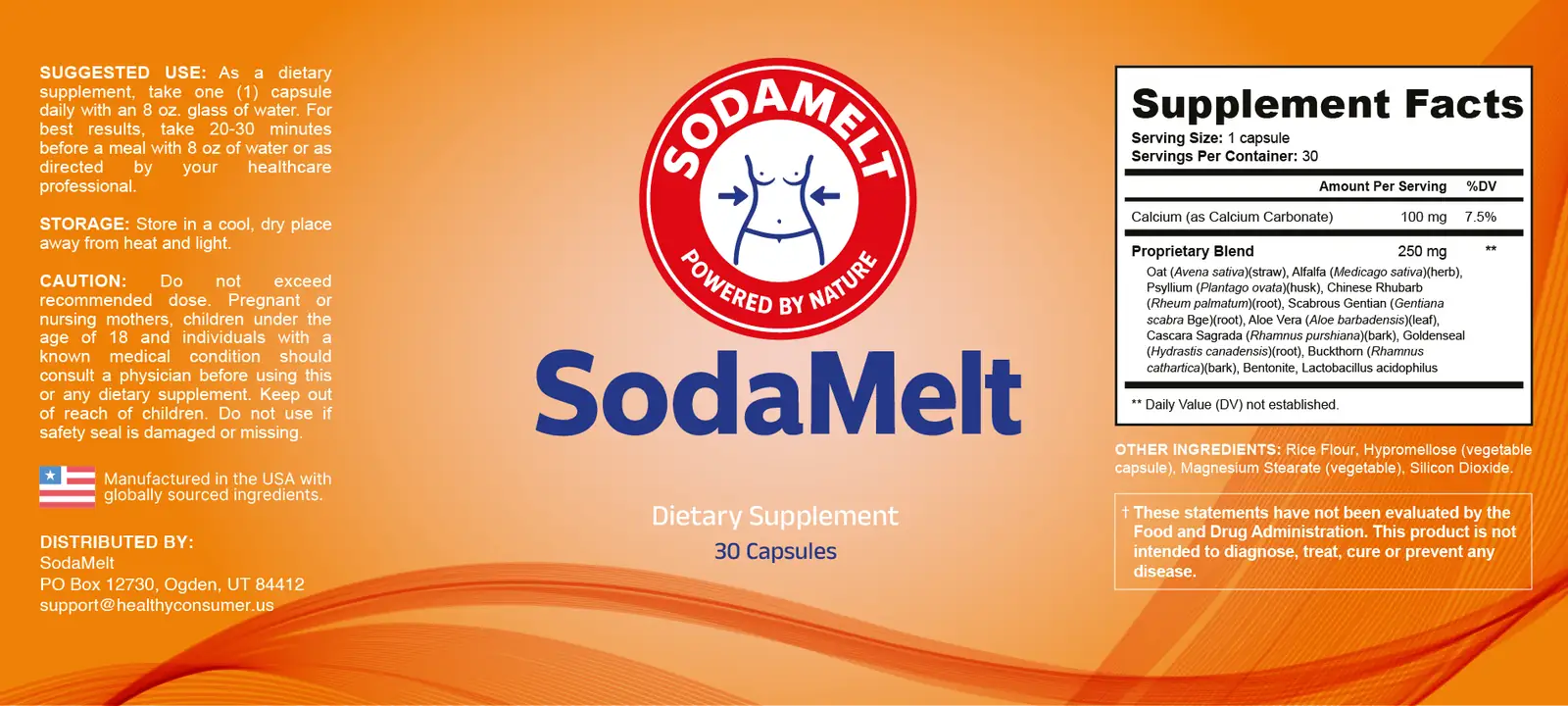
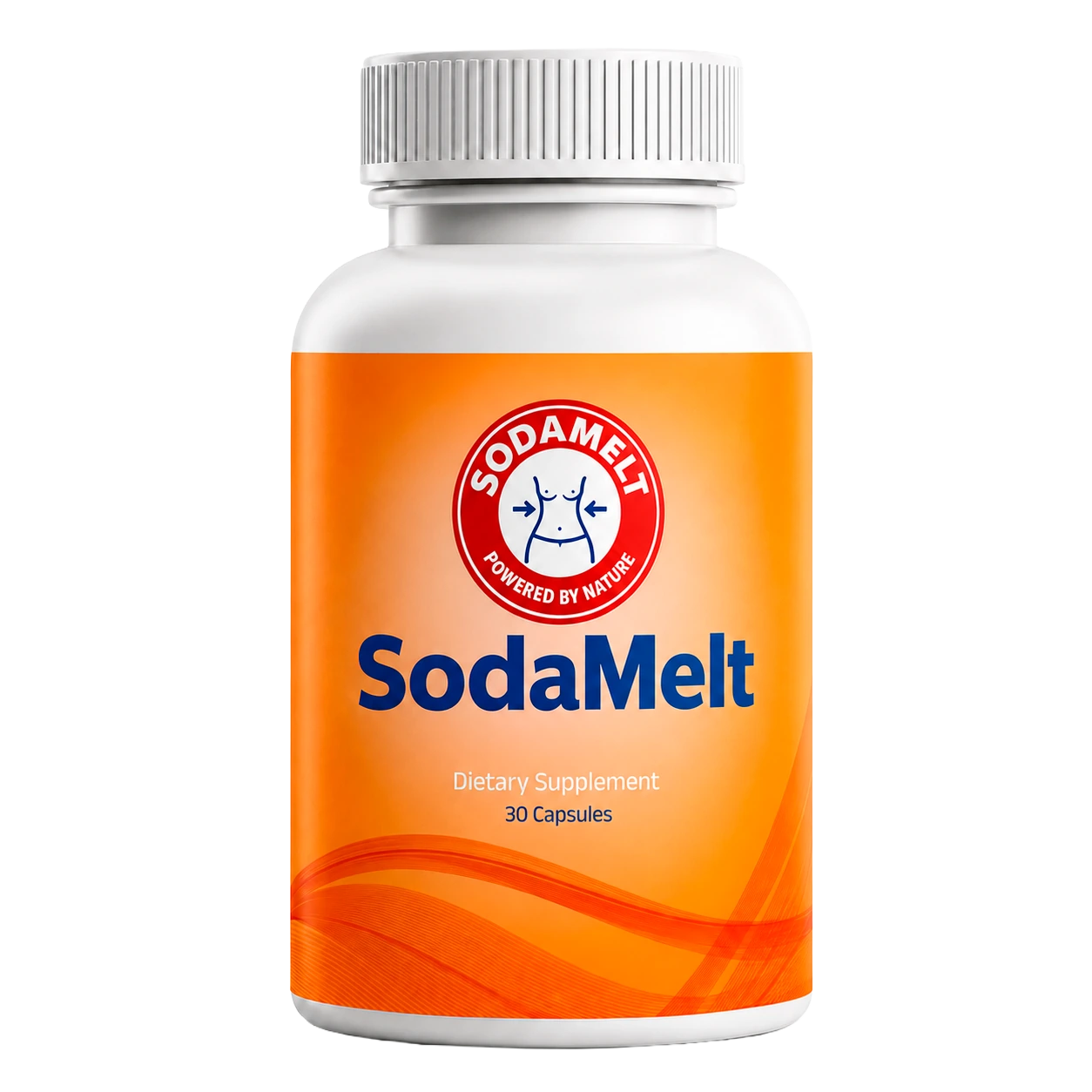
Two rows, eleven names inside one of them, every binomial and plant part on the label except the one row that has none.
One bottle $89 · six bottles $294 · 60-day money-back guarantee
Order SodaMelt On The Official WebsiteOne capsule a day · 30 per bottle · lot SOD-26/GO-2953
What position ten limits
Under 21 CFR 101.36, the names inside a proprietary blend are printed in descending order of weight. On this label that order is oat straw, alfalfa herb, psyllium husk, Chinese rhubarb root, scabrous gentian root, aloe vera leaf, cascara sagrada bark, goldenseal root, buckthorn bark, bentonite, Lactobacillus acidophilus. Bentonite sits second from the bottom of eleven names sharing 250 mg total.
| Position | Name | What that position implies here |
|---|---|---|
| 1–3 | Oat straw, alfalfa, psyllium | Plausibly the largest three by weight, though the split is not printed |
| 4, 6–7, 9 | Chinese rhubarb, aloe vera, cascara sagrada, buckthorn | The four anthranoid botanicals; the mechanism this bottle is actually built on |
| 5, 8 | Scabrous gentian, goldenseal | Middle of the printed order |
| 10 | Bentonite | Second from the bottom; a small share of an already small total |
| 11 | Lactobacillus acidophilus | Last by weight, with no unit this label uses to express a live count anyway |
The order is a legal requirement (21 CFR 101.36); the milligram split behind it is not printed, so this table shows what the position implies, not a measured amount.
Applying the even-split ceiling this site’s other blend post works through: 250 mg spread across eleven names averages 22.7 mg each, and a formulator loading weight toward the four anthranoid rows at positions four, six, seven and nine — the rows actually doing documented work — would leave less than that average for position ten. Whatever the real split, bentonite in this capsule is a small quantity, plausibly single-digit milligrams. That ceiling cuts both ways: it limits how much binding a buyer could reasonably expect, and it limits how much contaminant exposure a worst-case sourcing scenario could deliver.
What the nearest controlled trial found
No published trial has tested this specific eleven-ingredient blend, and none has isolated bentonite’s contribution within it. The closest available evidence is a controlled trial of a different proprietary cleanse blend built on the same anthranoid family — cascara sagrada bark and senna leaf — at 1,350 mg in healthy adult women, which found no measurable change in body composition, waist circumference, blood markers or gastrointestinal symptoms over the study period (Tinsley et al., 2019).
That trial did not include bentonite and cannot be extended to this product directly. It is relevant here for a narrower reason: it shows that a proprietary blend built around the same chemical family this label uses, tested as a whole, did not produce a measurable systemic effect on the panel of markers researchers checked. A reader who assumes a “detox” ingredient like clay must be doing something simply because it is on the label is assuming more than the nearest comparable trial supports.
The variety question this label doesn't answer
Bentonite is not one uniform material. Supplement and cosmetic sellers commonly distinguish sodium bentonite, which swells dramatically in water and is the type most associated with strong “drawing” marketing claims, from calcium bentonite, which swells less and is more often the type sold as a food-grade ingredient for internal use. The two share the same core mineral, montmorillonite, but differ in which exchangeable cation dominates their surface chemistry, which changes how they behave in water and, plausibly, how they behave in a digestive tract.
This label prints one word: “Bentonite.” It does not say which variety, and the two varieties are marketed on somewhat different claims. A reader comparing this product against marketing material for sodium bentonite drink powders, which is the more visible category online, may be importing claims that were never made for whatever variety is actually inside this specific capsule.
How to read this row specifically
Three practical takeaways, none of which require a lab result to act on:
- Treat the binding claim as chemistry, not as a demonstrated outcome for this capsule. The surface-charge property is real; the clinical translation to a few milligrams in a capsule is not shown on this label.
- The same property is the reason a sourcing question is fair to ask. This page cannot answer it from the label: closing that gap would take a finished-batch certificate of analysis for lead, cadmium, arsenic and mercury, none of which is printed here.
- Do not let a clay row on the ingredient list change how you think about the mechanism that is actually documented on this bottle, which is the anthranoid stimulant effect of the four botanicals covered on this site’s other post.
- If the variety matters to you specifically, sodium versus calcium bentonite, that is another fair question for the seller’s support desk, and one this label does not answer on its own.
Put together, the honest reading of this row is narrower than either a marketing page or a worst-case headline would suggest. Bentonite here is a small, undisclosed-amount ingredient with a real physical property behind its traditional use and a real, geology-dependent risk category attached to that same property. The label settles neither question. What it settles is only the position: tenth of eleven, ahead of a probiotic this site’s companion post covers separately.
References
- Orisakwe OE, Udowelle NA, Azuonwu O, Nkeiruka IZ, Nkereuwem UA, Frazzoli C. Cadmium and lead in geophagic clay consumed in Southern Nigeria: health risk from such traditional nutraceutical. Environ Geochem Health. 2020;42(11):3865-3875. PMID 32607698. https://pubmed.ncbi.nlm.nih.gov/32607698/
- Shannon M. Severe lead poisoning in pregnancy. Ambul Pediatr. 2003;3(1):37-9. PMID 12540252. https://pubmed.ncbi.nlm.nih.gov/12540252/
- Tinsley G, Urbina S, Santos E, et al. A Purported Detoxification Supplement Does Not Improve Body Composition, Waist Circumference, Blood Markers, or Gastrointestinal Symptoms in Healthy Adult Females. J Diet Suppl. 2019;16(6):649-658. PMID 29958034. https://pubmed.ncbi.nlm.nih.gov/29958034/