SodaMelt Official Website › Blog › Psyllium And The Trial Dose
Psyllium Husk: The Dose The Trials Actually Used
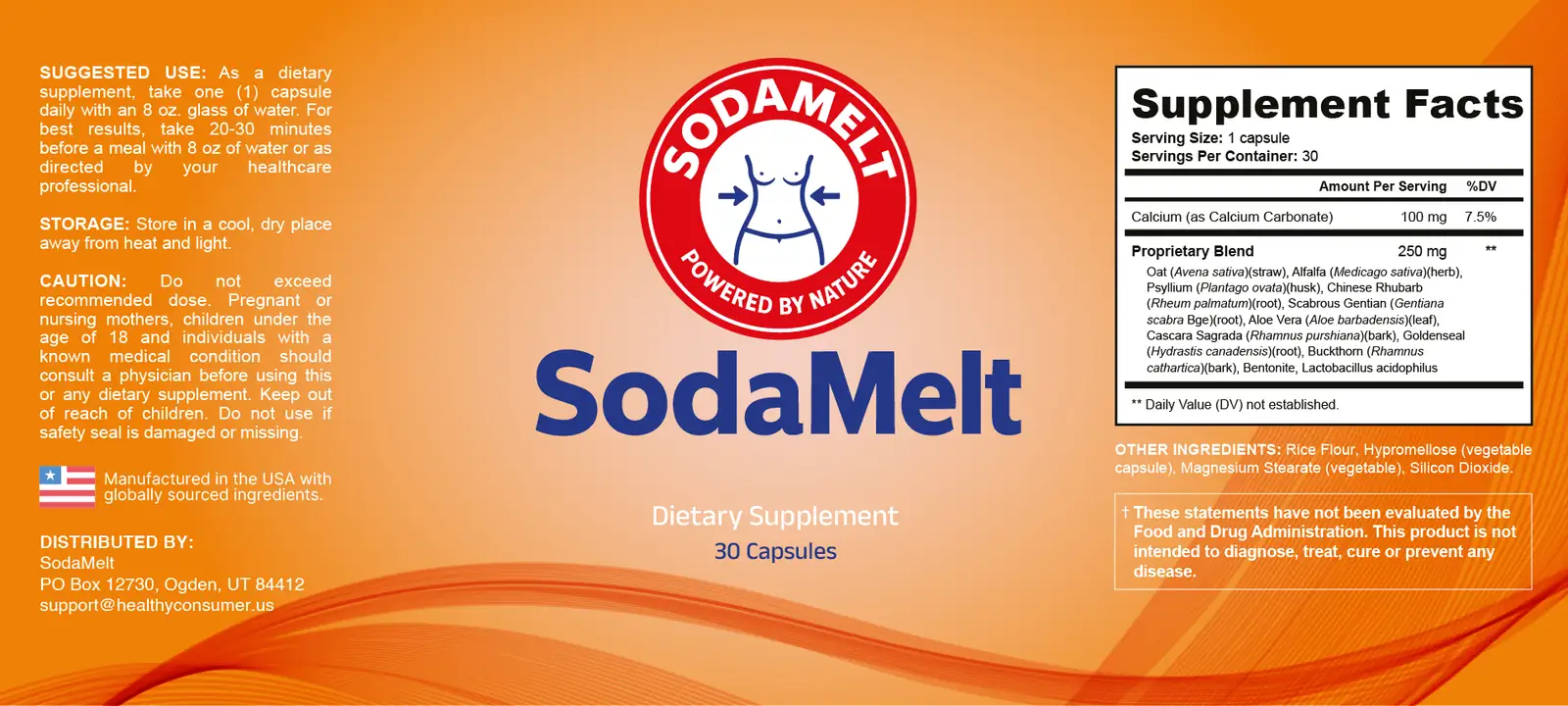
Psyllium is the ingredient in this aisle with the cleanest human evidence, and that evidence is written in grams. This panel prints one figure of 250 milligrams covering eleven botanicals, psyllium among them, which is the comparison worth doing before anything else on the bottle is weighed.
- The controlled trials that made psyllium's reputation ran at ten grams a day, sustained for weeks.
- This panel prints 250 mg for the entire blend, shared by 11 botanicals, with no figure for any one of them.
- Ten grams is forty times the whole blend, and roughly four hundred and forty times an even eleventh of it.
- The form matters as much as the weight: gel-forming husk and coarse bran do different things in the bowel.
- The water instruction on the label is the one line on the bottle with a documented failure behind it, and it is not decoration.
What psyllium husk actually is
Plantago ovata is a small plant grown mainly in western India, and the part that matters is the thin coat around its seed. Milled, that coat is sold as psyllium husk: a soluble, gel-forming fibre that absorbs many times its own weight in water and keeps hold of it on the way through.
That gel is the whole mechanism. It adds volume, it keeps the stool soft rather than merely bulky, and unlike a stimulant it does nothing to the colon wall. Nothing is absorbed, nothing enters the bloodstream, and the effect is physical rather than pharmacological.
Why it is regulated as a laxative at all
In granular over-the-counter form psyllium is a laxative drug rather than a supplement ingredient. The Federal Register final rule covering psyllium ingredients in granular dosage forms exists because those products carry drug labelling, with the amounts and the warnings that go with it. A supplement containing psyllium is a different regulatory object, and it does not have to tell you nearly as much.
The trials, and the figure in their methods
The modern evidence for psyllium is unusually tidy for this shelf. It is not a single famous study but a set of randomised work that broadly agrees, and every one of those papers prints the amount it used.
The primary-care trial randomised patients in general practice to psyllium, to bran or to placebo and ran for twelve weeks at ten grams a day. That design matters as much as the result: it tested ordinary people in ordinary surgeries rather than a referral population, which is the closest the literature gets to the person reading a supplement label.
The 2022 meta-analysis of fibre supplementation for chronic constipation pooled the randomised evidence and located the benefit above ten grams a day sustained for four weeks or more. Two independent lines of work, the same order of magnitude.
| What was studied | Daily psyllium | How long | Where that figure comes from |
|---|---|---|---|
| Irritable bowel symptoms in general practice | 10 g | 12 weeks | The primary-care randomised trial's own methods |
| Chronic constipation, pooled | above 10 g | 4 weeks or more | The 2022 systematic review and meta-analysis |
| Satiety before meals | 6.8 g | taken before two meals | A crossover study in healthy volunteers |
| Stool output and consistency | gram amounts | single and repeated dosing | The review resolving bran and psyllium misconceptions |
Every figure in the second column is in GRAMS, read from the study that used it. None of them is a prediction about a capsule.
Read the second column on its own and the point of this post is already made. Nothing in that column is a milligram figure, and nothing in it was reached in a week.
Why the unit is grams and not milligrams
A gel-forming fibre works by volume. It has to be present in enough quantity to hold water through the length of the bowel, and there is no potency trick that makes a small amount behave like a large one. That is the opposite of how most supplement ingredients work, and it is why fibre labels look so different from vitamin labels.
The satiety work makes the same point from another direction. A crossover study in healthy volunteers gave 6.8 grams before two meals of the day, not milligrams before one, and measured what happened to appetite afterwards.
Three consequences follow for anybody reading a panel:
- A fibre row printed in milligrams is either a very small amount of fibre or an amount nobody is telling you.
- A fibre row inside a blend cannot be checked at all, because the blend total is the only ceiling you have.
- A capsule is a small container. A dose measured in grams generally arrives as a powder, a sachet or several large capsules, which is a physical constraint rather than an opinion.
Reading the SodaMelt blend against those figures
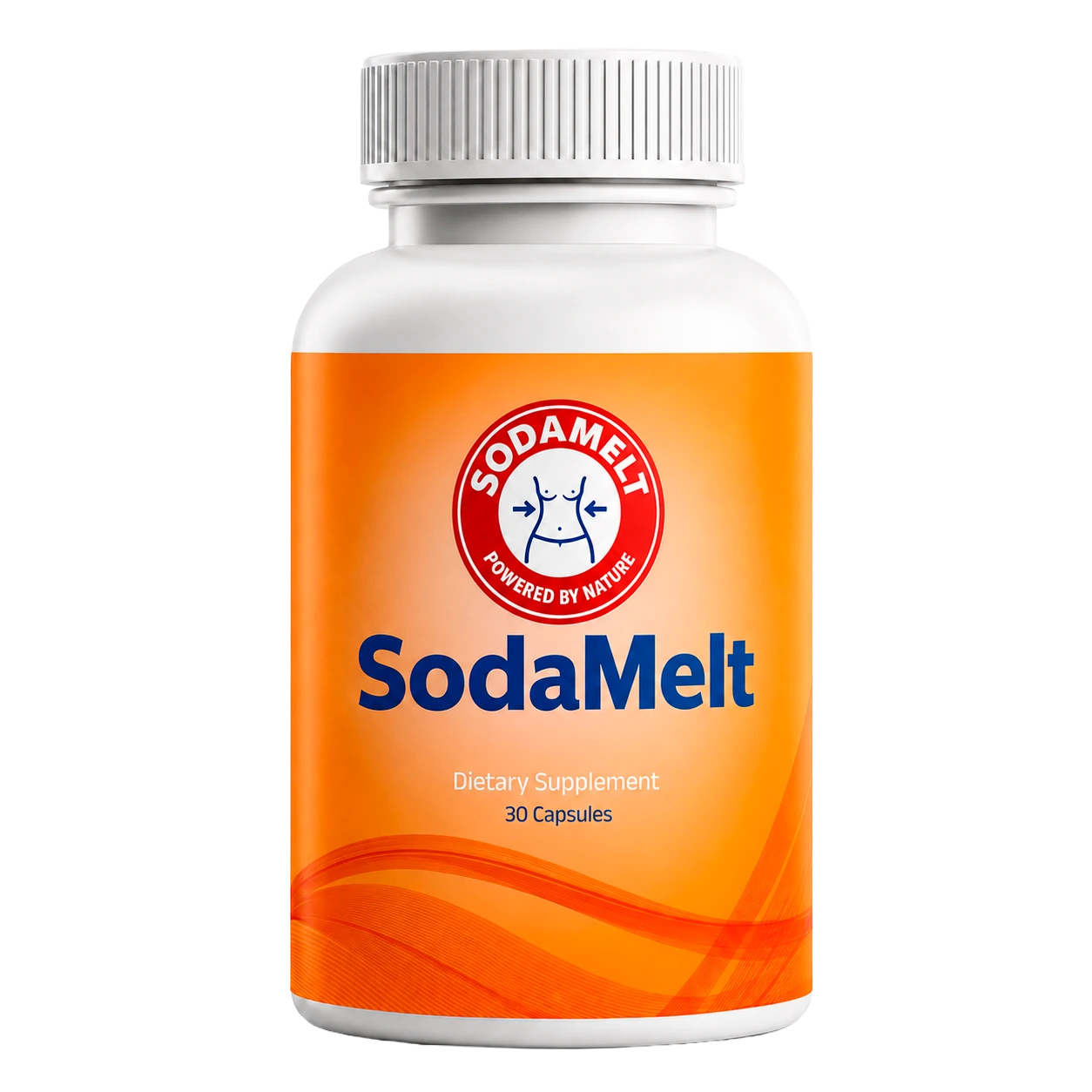
This label prints two rows. Calcium carries 100 mg and a percentage of its own. The Proprietary Blend carries 250 mg and a footnote reading Daily Value not established, and 11 botanicals sit inside it with no amount against any of them.
Psyllium is one of those eleven names. Its own share is not printed, so the only honest things that can be said about it are what the ceiling allows.
| The figure on the bottle | What it is | Against 10 g a day |
|---|---|---|
| 250 mg | The WHOLE Proprietary Blend, covering all 11 botanicals | Forty times smaller |
| 22.7 mg | An even split of 250 mg across 11 names | Roughly four hundred and forty times smaller |
| No printed figure | Psyllium's own share, which the panel does not state | Unknown, and capped by the row above it |
| 100 mg | Calcium, the only ingredient with an amount of its own | A different row entirely, and not fibre |
The first two rows are read off the label. The third is what the label declines to say. The arithmetic is the reader's to check.
That table is not an accusation of dishonesty. A proprietary blend is legal, disclosed and extremely common, and this one names every botanical inside it along with the Latin binomial and the plant part, which is more than much of the aisle manages. What it does is put a number on what the blend cannot be, which is a fibre dose of the kind the trials ran.
Read the whole SodaMelt panel before weighing one name
Two rows, 11 botanicals inside one of them, every name and plant part printed. One capsule a day, 30 to a bottle, with 60 days from purchase to change your mind.
One bottle $89 · six bottles $294 · 60-day money-back guarantee
Order SodaMelt On The Official WebsiteOne capsule a day · 30 per bottle · lot SOD-26/GO-2953
Form does as much work as weight
Even at the right weight, not all fibre behaves alike, and the difference is not a matter of degree. McRorie's review of laxative effects was written specifically to resolve the enduring confusion between wheat bran and psyllium in treatment guidelines, and the two turn out to do different jobs.
Coarse insoluble bran works mechanically, irritating the bowel wall to increase secretion. Gel-forming psyllium works by holding water, which softens as well as bulks. A guideline that treats fibre as one category gets the wrong answer for one of them.
What that means for a blend
A blend containing several plant materials with different fibre behaviours does not average them into a single effect. It delivers a small amount of each, and in this case one of those materials is a stimulant laxative family rather than a bulking one, which is dealt with in the post on the four anthranoid herbs.
The water instruction, and why it is there
The label says to take the capsule with an eight ounce glass of water. That is not a general wellness suggestion attached to a supplement out of habit; it is the instruction with the clearest documented reason behind it on the whole bottle.
A published case report describes intestinal obstruction caused by psyllium taken as a laxative, and the mechanism is exactly what it sounds like. A gel-forming fibre swallowed without enough fluid can form a plug rather than a gel.
“Take one (1) capsule daily with an 8 oz glass of water. For best results, take 20–30 minutes before a meal with 8 oz of water or as directed by your healthcare professional.” That sentence is reproduced on the how to take it page as well, because it is the one instruction worth following exactly rather than approximately.
What psyllium is not being accused of
The criticism in this post is narrow, and its edges are worth marking.
- Not the wrong ingredient. Psyllium is the right ingredient for a digestion formula. It has the best trial base in the aisle and the least exotic mechanism, and its presence on this panel is a point in the formula's favour.
- Not the wrong plant part. The label says husk, which is what every trial used. That is a genuine pass, and it is not shared by the oat row, which is covered in its own post.
- Not concealed. The name, the binomial and the part are all printed. What is missing is one number, and the missing number is a feature of the blend rather than of the ingredient.
- Not a safety problem at this scale. The obstruction literature concerns laxative doses taken with too little fluid, which is an argument for following the water instruction rather than an argument against the capsule.
Five questions worth asking of any fibre row
None of this is specific to one brand. Fibre turns up across this shelf, and five questions sort the labels quickly.
- Is the amount printed in grams or milligrams? Grams is the unit the evidence uses.
- Is it inside a proprietary blend? If so, the blend total is the only ceiling you have.
- Which plant part is named? Husk is what the psyllium trials used.
- Is it gel-forming or coarse insoluble fibre? They are not interchangeable.
- Does the label tell you how much water to take it with, and does it say why?
On this bottle the answers run: milligrams, yes it is inside a blend, husk, gel-forming, and yes with a full eight ounce glass. Two of the five go the right way, one is neutral and two are the reason the 60-day window on the guarantee page is worth understanding before a first order rather than after a third bottle.
A dietary supplement for adults of 18 and over. Not a medicine, not FDA-approved, and not intended to diagnose, treat, cure or prevent any disease. The seller's three permitted supports cap everything said about it, and no arithmetic in this post changes that ceiling. Digestive symptoms that are new, severe or persistent belong with someone who can examine you rather than with a capsule.
References
- Bijkerk CJ, de Wit NJ, Muris JW, et al. Soluble or insoluble fibre in irritable bowel syndrome in primary care? Randomised placebo controlled trial. BMJ. 2009;339:b3154. PMID 19713235. https://pubmed.ncbi.nlm.nih.gov/19713235/
- van der Schoot A, Drysdale C, Whelan K, et al. The Effect of Fiber Supplementation on Chronic Constipation in Adults: An Updated Systematic Review and Meta-Analysis of Randomized Controlled Trials. Am J Clin Nutr. 2022;116(4):953-969. PMID 35816465. https://pubmed.ncbi.nlm.nih.gov/35816465/
- McRorie JW Jr, Fahey GC Jr, Gibb RD, et al. Laxative effects of wheat bran and psyllium: Resolving enduring misconceptions about fiber in treatment guidelines for chronic idiopathic constipation. J Am Assoc Nurse Pract. 2020;32(1):15-23. PMID 31764399. https://pubmed.ncbi.nlm.nih.gov/31764399/
- Brum JM, Gibb RD, Peters JC, et al. Satiety effects of psyllium in healthy volunteers. Appetite. 2016;105:27-36. PMID 27166077. https://pubmed.ncbi.nlm.nih.gov/27166077/
- Hefny AF, Ayad AZ, Matev N, et al. Intestinal obstruction caused by a laxative drug (Psyllium): A case report and review of the literature. Int J Surg Case Rep. 2018;52:59-62. PMID 30321826. https://pubmed.ncbi.nlm.nih.gov/30321826/
- Laxative drug products for over-the-counter human use; psyllium ingredients in granular dosage forms. Final rule. Fed Regist. 2007;72(60):14669-74. PMID 17450664. https://pubmed.ncbi.nlm.nih.gov/17450664/